
How Is Ink Made?
You make ink by mixing pigments or dyes with binders, solvents, and additives to get the right color, flow, and drying time. Then, you grind the blend to break down particles evenly and filter out impurities for a smooth finish.
This process results in durable, vibrant ink suited for many uses.
If you want to understand how ink evolved, the types available, and the quality checks involved, there’s plenty more fascinating detail ahead.
Key Takeaways
- Ink production begins by selecting pigments or dyes to provide color and opacity. Pigments or dyes are mixed with binders and solvents to create a uniform ink base.
- Additives are incorporated to enhance drying time, gloss, and durability of the ink. The ink mixture undergoes grinding to ensure fine particle dispersion and smooth flow.
- Finally, the ink is filtered for impurities and rigorously tested for color, viscosity, and stability before packaging. This ensures you get a consistent and high-quality product every time.
History and Evolution of Ink
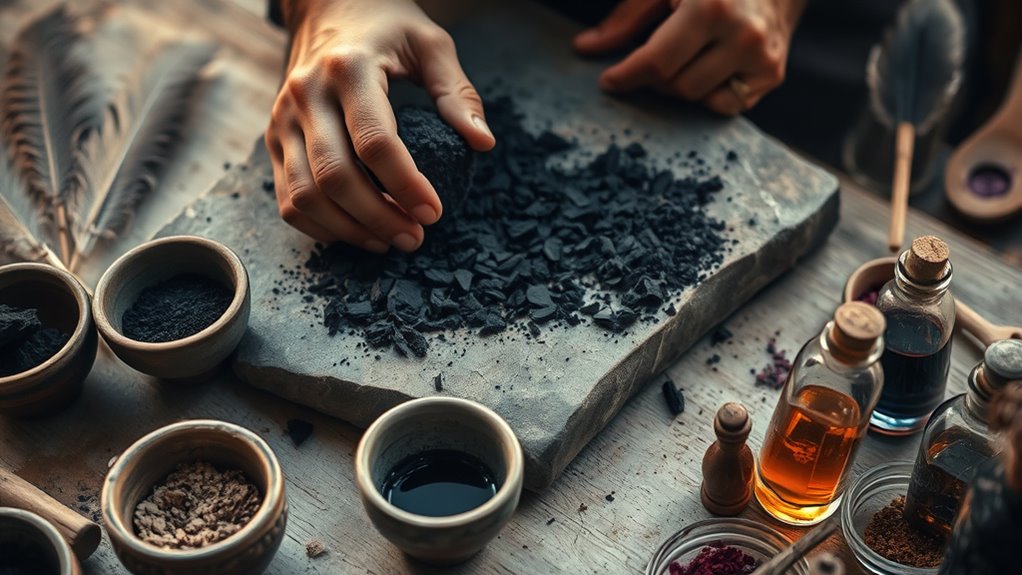
How did ink first come into existence, and why has it evolved so much over time? You’ll find that ink dates back thousands of years to ancient civilizations like the Egyptians and Chinese, who mixed natural materials to create basic pigments.
Initially, ink served simple purposes—recording events or art. As societies advanced, so did ink. You’ve seen how it transformed from handmade concoctions to scientifically engineered formulas.
This evolution happened because people needed inks that were more durable, vibrant, and compatible with new writing tools like pens and printers. Today, ink is more sophisticated, designed for specific uses and technologies.
Understanding this history helps you appreciate how ink has become an essential medium for communication and creativity throughout human progress.
Key Ingredients Used in Ink Production
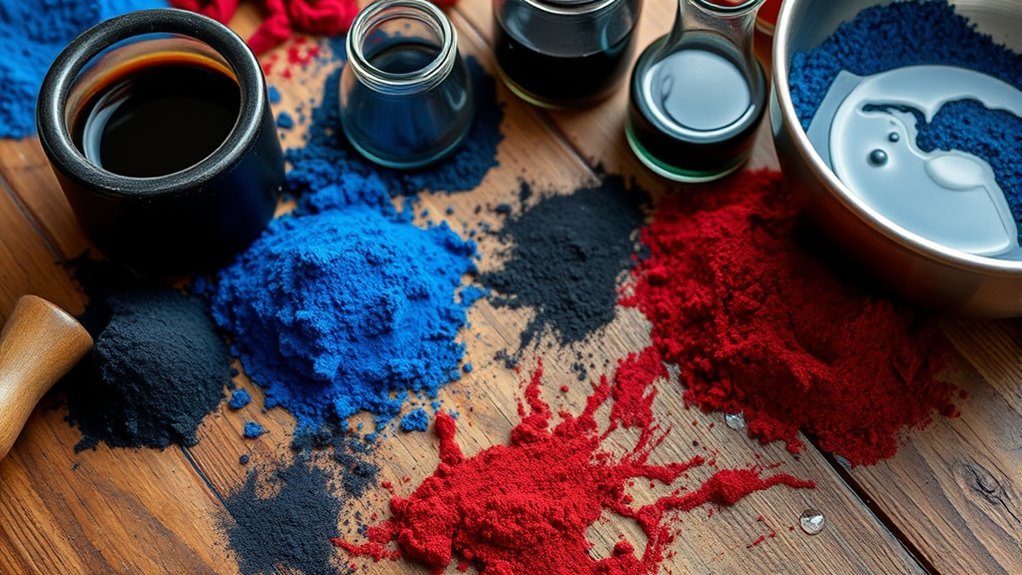
Although ink comes in many forms, its production always relies on a few key ingredients that give it color, consistency, and permanence. When you look closely, these components work together to create the ink’s unique properties.
Here are the essential ingredients you’ll find in most inks:
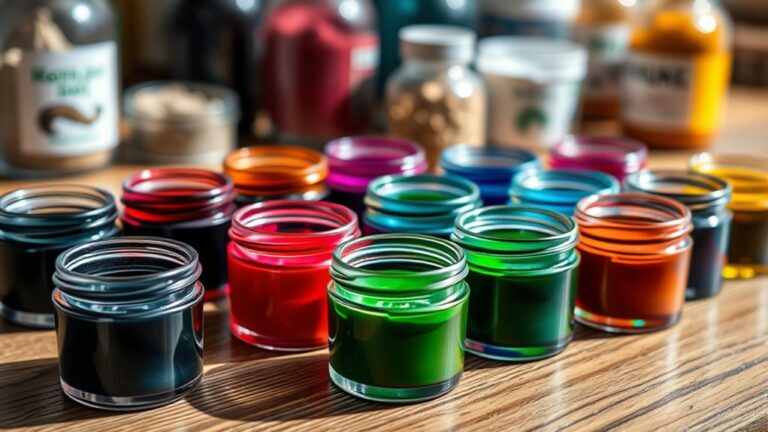
- Pigments or dyes: Provide vibrant color and opacity.
- Binders: Help pigment particles stick to the surface.
- Solvents: Control the ink’s flow and drying time.
- Additives: Enhance properties like gloss, drying speed, or durability.
- Preservatives: Prevent microbial growth and extend shelf life.
Different Types of Ink and Their Uses
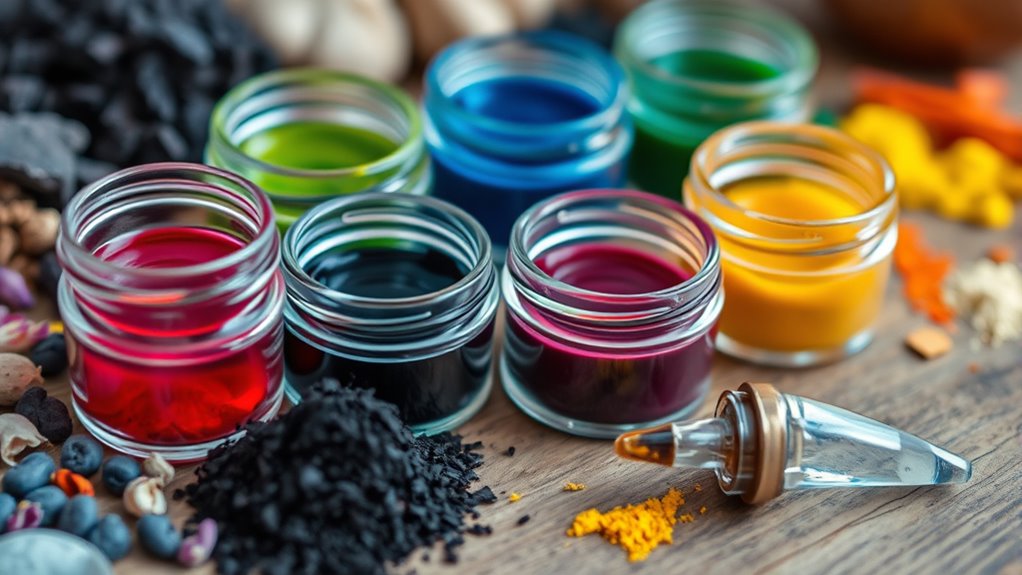
The ingredients you just learned about come together in different ways to create various types of ink, each suited for specific tasks. When you use dye-based ink, you get vibrant colors ideal for everyday printing and writing.
Pigment-based ink, on the other hand, offers better water and fade resistance, perfect for archival documents. If you work with fountain pens, you rely on fountain pen ink, which flows smoothly without clogging.
For artistic projects, you might choose India ink, known for its deep black color and permanence. Meanwhile, UV ink reacts to ultraviolet light and is used in security printing.
Understanding these differences helps you pick the right ink for your needs, ensuring your projects turn out just as you expect. Easy, right?
The Manufacturing Process of Ink
Since ink combines several complex ingredients, its manufacturing process requires careful mixing and precise control. You start by selecting pigments or dyes, then combine them with solvents and binders to create a uniform base.
Ink manufacturing demands precise mixing of pigments, solvents, and binders to form a consistent, high-quality base.
Next, you add additives to enhance properties like drying time and flow. The mixture undergoes grinding to ensure fine particle dispersion, which is critical for smooth application.
Finally, you filter the ink to remove impurities before packaging. It’s all about making sure the ink performs just right.
Here’s a quick overview of the main steps you’ll follow:
- Pigment or dye selection
- Mixing with solvents and binders
- Adding performance-enhancing additives
- Grinding for particle uniformity
- Filtering to eliminate contaminants
Quality Control and Testing in Ink Making
How do manufacturers guarantee that every batch of ink meets high standards? They rely on rigorous quality control and testing throughout the production process.
You’ll find that samples from each batch are tested for color consistency, viscosity, drying time, and adhesion to ensure the ink performs as expected.
Advanced instruments measure pigment dispersion and particle size, preventing clogs and uneven printing.
You’ll also notice tests for chemical stability, making sure the ink won’t degrade or react unexpectedly over time.
By monitoring these factors closely, manufacturers catch defects early and maintain uniformity.
When you use ink that’s undergone strict quality control, you’re getting a product that delivers reliable, vibrant results every time.
Innovations and Future Trends in Ink Technology
What breakthroughs are shaping the future of ink technology? As you explore innovations, you’ll see that ink is evolving to meet environmental and performance demands.
Manufacturers are developing inks that are more sustainable, efficient, and versatile. Here are some key trends you should watch:
- Bio-based and biodegradable inks reducing ecological impact
- Nanotechnology enhancing color vibrancy and durability
- UV-curable inks enabling faster drying and energy savings
- Smart inks incorporating sensors for interactive printing
- 3D printing inks expanding applications beyond traditional media
Pretty exciting stuff, right? These advancements are not just about making ink better—they’re changing how we think about printing altogether.
Frequently Asked Questions
Can Ink Be Made at Home Using Natural Materials?
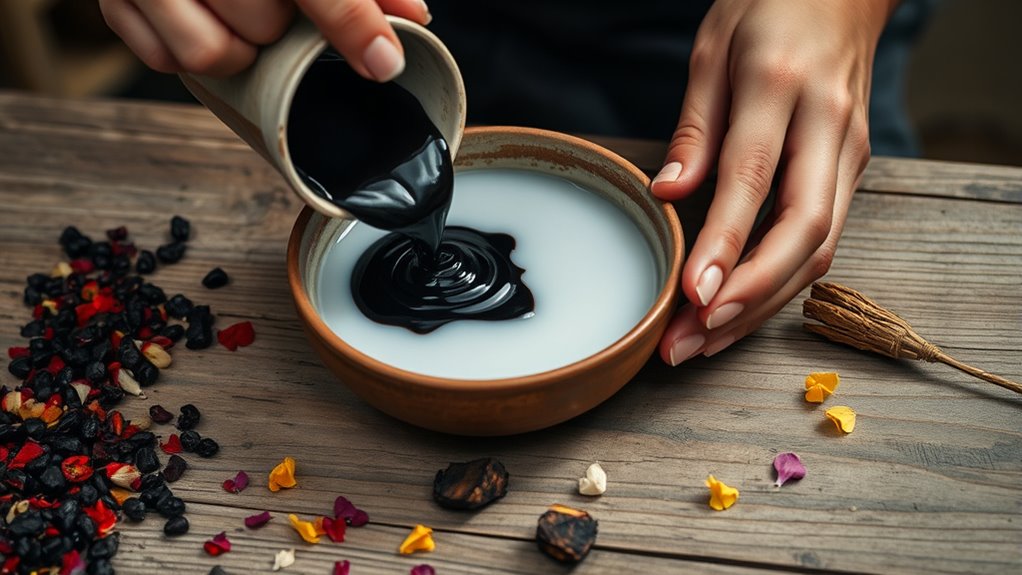
Yes, you can make ink at home using natural materials like berries, charcoal, or coffee. You’ll mix them with water and a binder like gum arabic to create your own homemade, eco-friendly ink for writing or art.
It’s pretty simple and fun to try out. Plus, making your own ink means you can customize the colors and textures however you like!
How Long Does Ink Last Before It Dries Out or Degrades?
Ink’s lifespan is like a fleeting shadow—usually lasting months to years if sealed tight. Once opened, it dries out or degrades within weeks to months, so you’ll want to use it before its spirit fades.
Basically, if you keep it sealed, the ink can stick around for quite a while. But once you crack that bottle open, the countdown begins. You’ll notice it drying out or losing quality pretty quickly, often in just a few weeks. So, it’s best to use it up sooner rather than later to keep your writing looking fresh.
Is All Ink Safe for Human Skin Contact?
Not all ink is safe for your skin. Some contain harmful chemicals or allergens, so you should only use inks labeled as skin-safe or designed for tattoos, cosmetics, or body art.
This helps you avoid irritation or health risks. Always check the label before applying any ink to your skin. Better safe than sorry!
What Environmental Impacts Result From Ink Production?
You can’t judge a book by its cover—ink production releases volatile organic compounds and heavy metals, polluting air and water.
You should choose eco-friendly inks to minimize your environmental footprint and keep our planet cleaner.
How Does Temperature Affect Ink Drying Time?
Higher temperatures speed up ink drying time by accelerating solvent evaporation. You’ll notice ink dries faster in warm conditions, while cooler temperatures slow drying.
This can potentially cause smudging or longer wait times before handling the printed material. So, keeping things warm can really help your ink set quicker and avoid those annoying smears.
Conclusion
Now that you’ve uncovered the art and science behind ink, you see it’s more than just a simple liquid—it’s the silent storyteller of history and innovation. From ancient recipes to cutting-edge formulas, ink flows through time like a river, constantly evolving to meet your needs.
Whether you’re jotting notes or creating masterpieces, understanding ink’s journey helps you appreciate every stroke as a blend of tradition, chemistry, and creativity all in one. Ink is not just about color; it’s about expression, communication, and the technology that makes it possible.
So next time you pick up a pen or watch a printer in action, remember the fascinating process of how ink is made. It’s a perfect mix of science and art, reflecting centuries of human ingenuity and the endless possibilities ink offers in writing, drawing, and printing. Ink truly is the medium that connects the past with the future.