
How to Get Pen Ink Off Leather in 3 Easy Steps
To get pen ink off leather, start by gathering your supplies like a soft cloth, mild dish soap, and lukewarm water. These simple items are all you need to begin the cleaning process.
Next, mix a few drops of soap with water, dampen the cloth, and gently dab the ink stain without rubbing hard to avoid damage. Be patient here—rubbing can make things worse, so just dab gently.
Finally, apply leather conditioner to restore moisture and shine. This step is important because it helps keep your leather looking fresh and prevents it from drying out.
Taking these steps carefully helps protect your leather, and there’s more detailed advice on tackling stubborn stains and maintaining your leather’s look. Keep your leather items looking their best with regular care!
Key Takeaways
- Dampen a soft cloth with mild dish soap and warm water, then gently dab the ink stain without rubbing harshly.
- Use cotton swabs dipped in the cleaning solution for precision on small ink spots.
- If the stain persists, apply a specialized leather cleaner cautiously, testing it on a hidden area first.
- After cleaning, apply leather conditioner in circular motions to restore moisture and prevent damage.
- Buff the leather with a dry cloth to restore shine and allow the conditioner to absorb fully.
Gather Your Cleaning Supplies
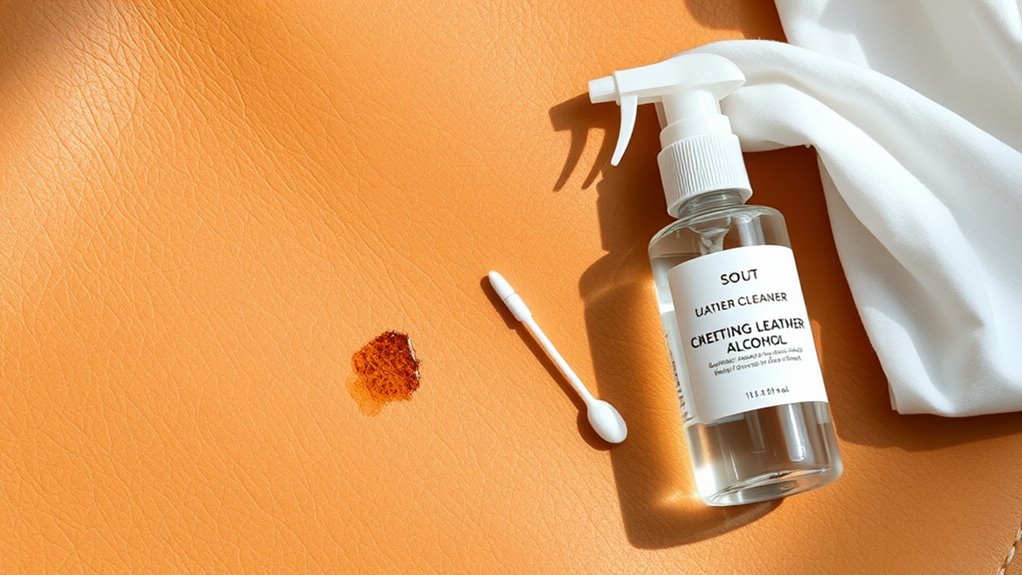
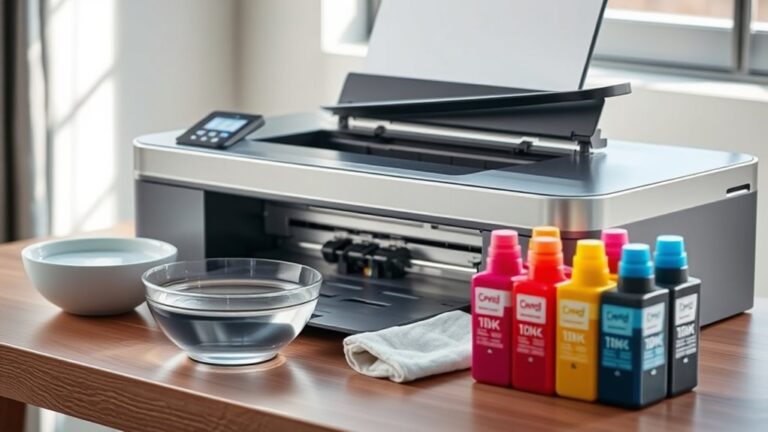
Before you start removing the pen ink, gather all the necessary cleaning supplies to make the process smooth and effective. You’ll need a soft, clean cloth or microfiber towel to gently blot the ink without damaging the leather.
Gather soft cloths and cleaning supplies before removing pen ink to protect your leather effectively.
Have some cotton swabs handy for precision cleaning in small or hard-to-reach areas. Keep a bowl of lukewarm water nearby to dampen the cloth, but avoid soaking the leather.
Also, prepare a gentle brush, like a soft-bristled toothbrush, to lightly agitate stubborn spots if needed. Make sure you have paper towels or an absorbent cloth ready to catch any excess moisture.
Finally, verify you’re working in a well-lit area so you can clearly see the ink stains and monitor your progress as you clean. This way, you won’t miss any spots!
Apply a Gentle Cleaning Solution
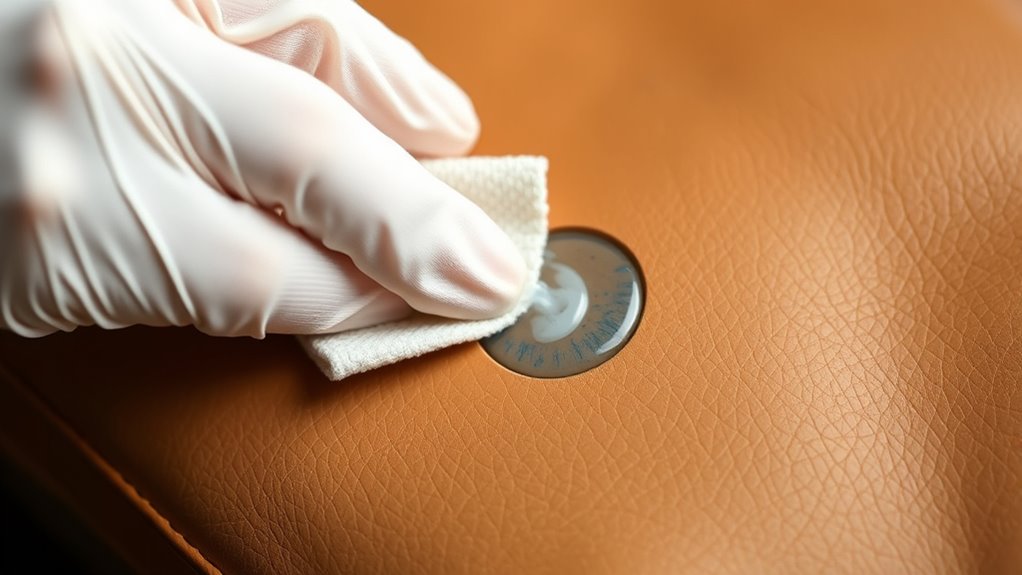
Once you have your supplies ready, it’s time to choose a gentle cleaning solution that won’t harm your leather. Mix a few drops of mild dish soap with warm water in a small bowl.
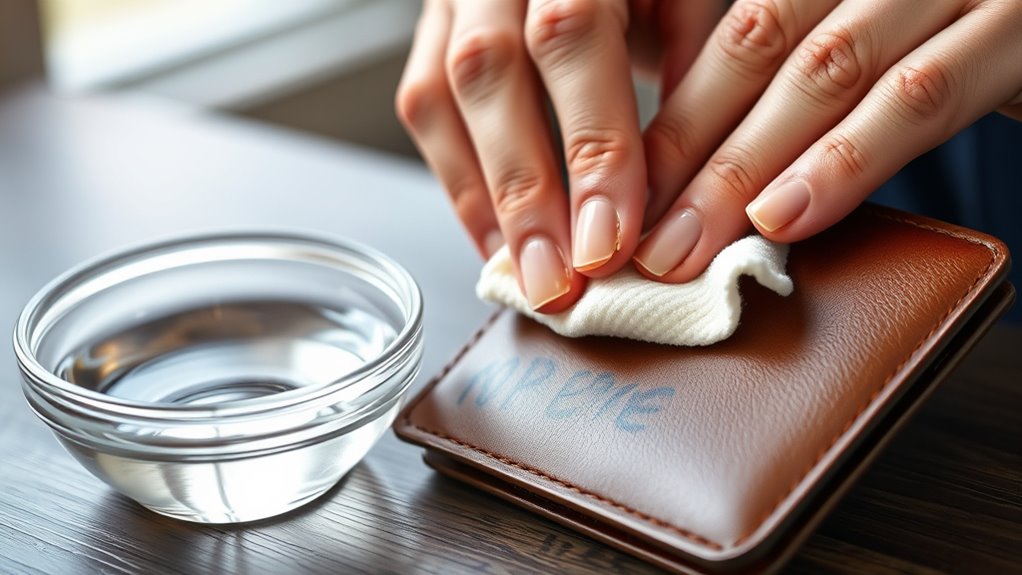
Dip a soft cloth into the solution, wring it out well to avoid soaking the leather, and gently dab the ink stain. Avoid rubbing harshly, as this can damage the leather’s surface.
If the stain persists, you can try a specialized leather cleaner, following the product instructions carefully. Just make sure to test the solution on a hidden area first to ensure it doesn’t discolor the leather.
Work patiently, applying the solution in small sections until the ink lifts. Remember, less is more—over-wetting leather can cause damage or warping.
Condition and Protect the Leather
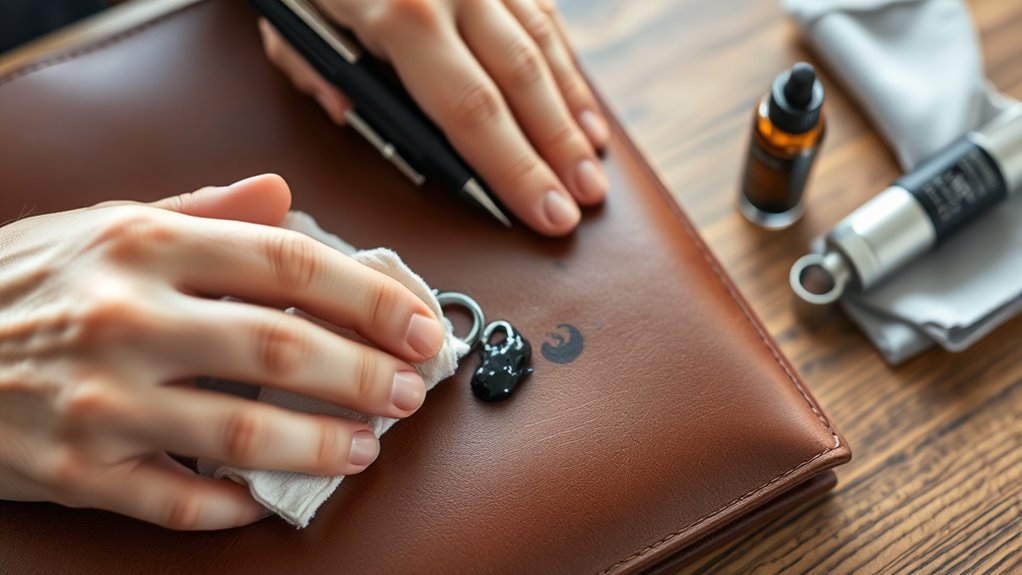
Although the ink stain may be fading, you’ll want to condition the leather to restore its moisture and flexibility. After cleaning, apply a small amount of leather conditioner using a soft cloth, gently rubbing it in circular motions.
Condition leather after cleaning by gently rubbing conditioner in circular motions to restore moisture and flexibility.
This nourishes the leather, preventing it from drying out or cracking. Let the conditioner absorb for at least 20 minutes, then buff the surface with a clean, dry cloth to bring back its natural shine.
Conditioning not only revitalizes the leather but also creates a protective barrier against future stains and damage. Make sure to choose a conditioner suited for your leather type.
Regular conditioning keeps your leather looking its best and prolongs its lifespan after each cleaning session. It’s a simple step that really makes a difference!
Frequently Asked Questions
Can Pen Ink Permanently Stain Leather?
Yes, pen ink can permanently stain leather if you don’t act quickly.
You’ll want to treat the spot immediately because the longer it sits, the harder it becomes to remove and may cause lasting damage.
Is It Safe to Use Alcohol-Based Cleaners on Leather?
Sure, you can totally ruin your leather by using alcohol-based cleaners—if you want to!
But if you don’t, avoid them. They can dry and damage leather.
Stick to leather-safe products instead; your leather will thank you.
How Quickly Should I Treat an Ink Stain on Leather?
You should treat an ink stain on leather as quickly as possible, ideally within minutes. Acting fast prevents the ink from setting.
This makes it easier to remove without damaging the leather or leaving a permanent mark. So, don’t wait too long to start cleaning!
Can Ink Removal Damage Colored or Delicate Leather?
You might worry ink removal damages delicate leather, but if you act gently and use proper products, you won’t harm the color or texture.
Always test a small hidden area first to keep your leather safe and vibrant.
Are There Professional Services for Ink Stain Removal on Leather?
Yes, you can find professional services specializing in ink stain removal on leather. They use expert techniques and safe products to clean your leather without causing damage.
It’s a great option if you want guaranteed results. Plus, leaving it to the pros can save you a lot of time and worry!
Conclusion
Now that you’ve gathered your supplies and tackled the ink stain with care, you’ve taken the first big steps toward restoring your leather. Conditioning your leather afterward helps protect its future.
You acted quickly, cleaned gently, and cared deeply. By following these simple steps, you’ve not only removed the pen ink but also preserved the leather’s elegance and durability.
Keep this routine in mind, and you’ll keep your leather looking flawless. With regular care, it will feel soft and last longer every day.
Removing pen ink from leather doesn’t have to be stressful. Just remember to be gentle and patient, and your leather will thank you with lasting beauty and resilience.