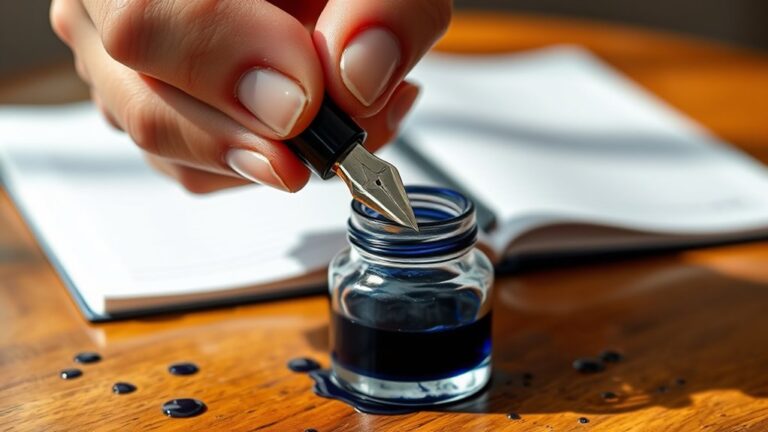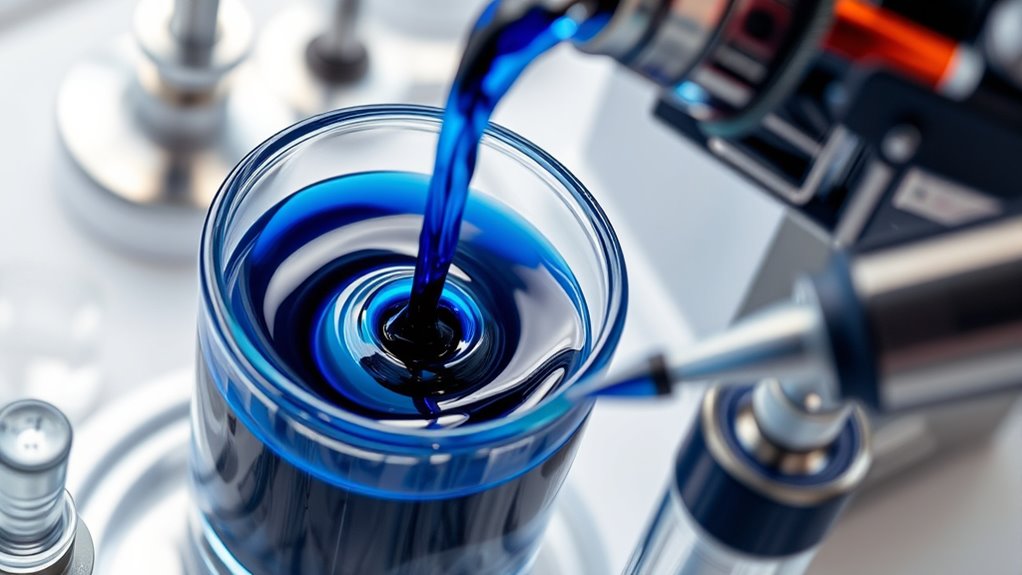
How Ink Is Made for Pens Step by Step
You start by gathering high-quality pigments, solvents, and binders, ensuring everything is pure and measured precisely. This is the foundation for making smooth and vibrant ink for pens.
Then, you grind and mix the pigments with solvents and additives to create a consistent blend. After that, filtering out impurities is key to achieving the perfect texture and color.
Next, you test the ink’s consistency, color, and drying time to make sure it performs well.
Finally, you fill and seal the ink into cartridges or bottles, maintaining strict quality control throughout the process.
Keep exploring, and you’ll uncover the detailed steps that make reliable pen ink possible. It’s fascinating how each stage contributes to the ink you use every day!
Key Takeaways
- Prepare raw materials by selecting pigments, solvents, and binders, ensuring purity and correct proportions for consistent ink quality.
- Grind and mix pigments using mills to achieve uniform particle size and disperse additives for desired viscosity and flow properties.
- Filter and refine the ink to remove impurities, then test for color consistency, drying time, viscosity, and stability.
- Fill ink into cartridges or bottles with automated machines, ensuring precise volume, leak-proof sealing, and proper labeling.
- Package and distribute the finished ink safely to retailers or consumers, maintaining quality during transport and storage.
Gathering and Preparing Raw Materials
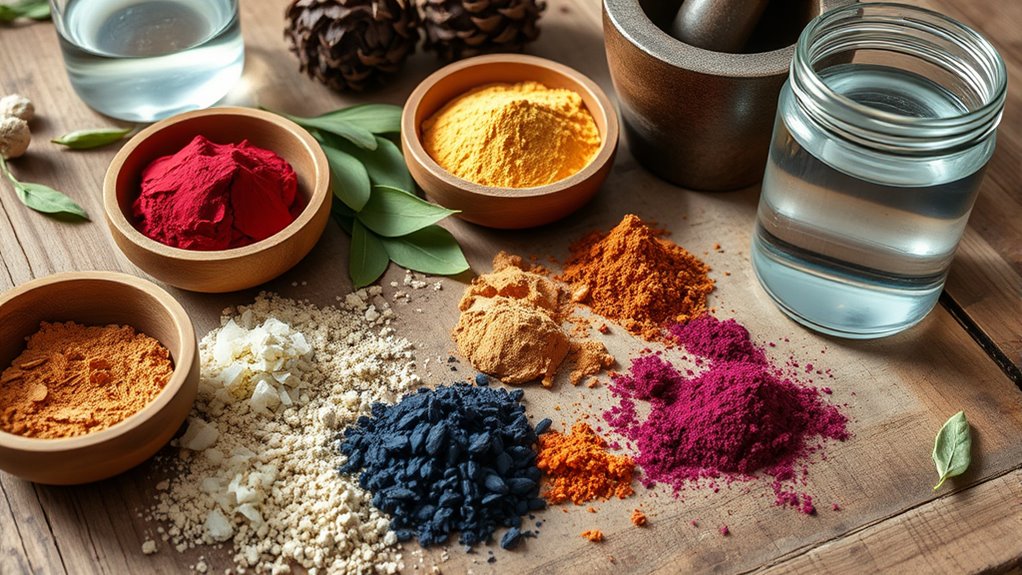
Before ink can flow from a pen, manufacturers gather and prepare key raw materials like pigments, solvents, and binders. You’ll find pigments provide color, solvents adjust consistency, and binders help the ink adhere to paper.
When preparing these materials, you verify each one meets strict quality standards. The solvents must be pure to avoid clogging pen tips, and binders need to dissolve evenly to prevent streaks.
You also measure precise amounts to maintain consistent ink performance. Once gathered, these ingredients undergo initial mixing and filtering to remove impurities.
This step is vital because any contamination can affect the ink’s flow and drying time. By carefully preparing these raw materials, you lay the foundation for producing smooth, reliable ink.
Selecting and Grinding Pigments
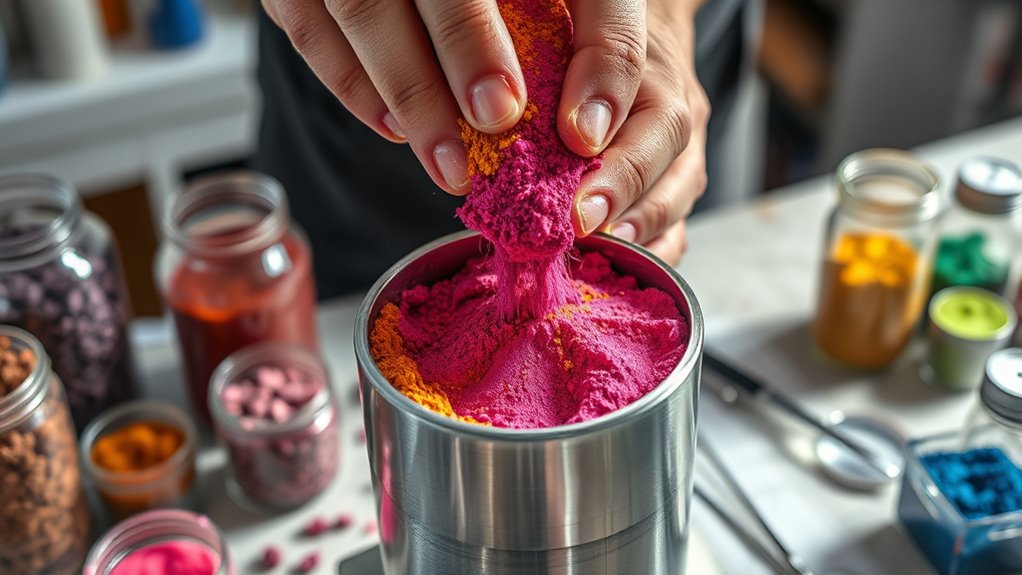
Now that you’ve gathered your raw materials, it’s time to select the right pigments for your ink. You’ll learn about different pigment types and how grinding them properly guarantees a smooth, even color.
Getting the particle size just right is key to achieving consistent ink quality. It might seem a bit tricky at first, but once you get the hang of it, you’ll see the difference it makes.
Pigment Types Overview
How do manufacturers choose the right pigments to create vibrant, long-lasting ink? You’ll find they select from organic, inorganic, and specialty pigments. Each offers unique qualities like brightness, durability, and solubility.
Organic pigments provide vivid colors, while inorganic ones ensure excellent lightfastness. Specialty pigments add effects such as metallic sheen or fluorescence.
Understanding these types helps you grasp why certain inks perform better in specific applications.
| Pigment Type | Characteristics | Common Uses |
|---|---|---|
| Organic | Bright, vivid colors | Markers, gel pens |
| Inorganic | Durable, lightfast | Ballpoint, fountain pens |
| Specialty | Metallic, fluorescent effects | Art supplies, highlights |
| Mixed Blends | Custom properties | Specialty inks |
Grinding Techniques Explained
When you select pigments for ink, grinding them to the right consistency is essential to achieve smooth application and vibrant color. You’ll start by choosing a grinding method based on the pigment type and desired ink properties.
Commonly, ball mills or roller mills are used to break down pigment particles. These machines apply mechanical force, crushing pigments into fine particles without damaging their color integrity.
You’ll monitor the process carefully, ensuring the pigment is neither too coarse nor overly powdered, which could affect flow and adhesion. Wet grinding is often preferred, mixing pigments with a liquid medium to prevent clumping and improve dispersion.
Achieving Uniform Particle Size
Fine-tuning pigment size doesn’t stop at grinding; achieving a uniform particle size plays a key role in producing high-quality ink. When particles vary too much, your ink can separate, clog pen tips, or produce uneven color.
To get this just right, you’ll focus on:
- Selecting Quality Pigments: Start with pigments that naturally break down evenly, ensuring consistency.
- Using Precision Grinding Equipment: Employ mills or grinders designed to create uniform particle sizes without overheating the pigments.
- Regular Testing: Continuously check particle size distribution with sieves or laser diffraction tools to maintain consistency.
Mixing Pigments With Solvents and Additives
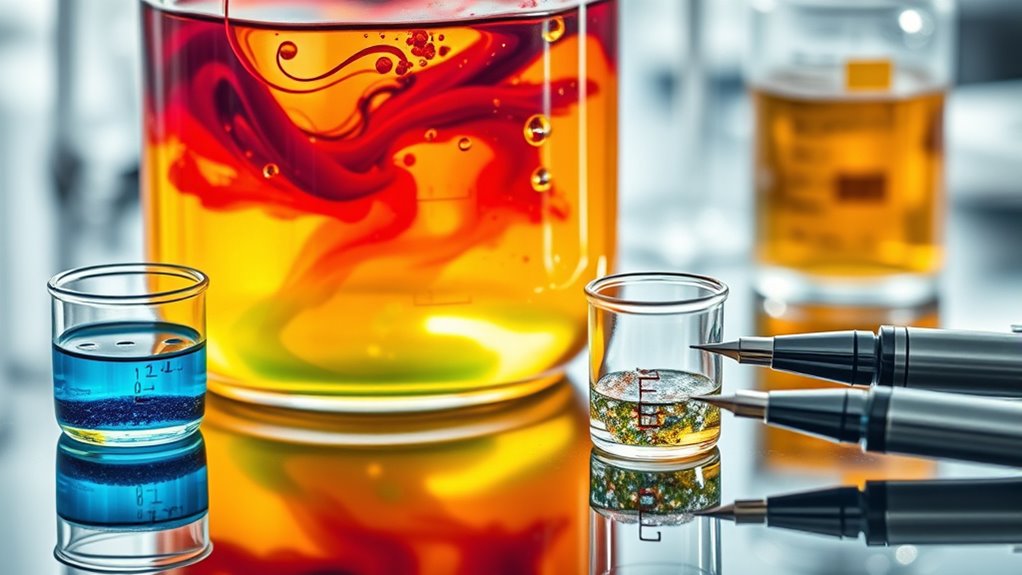
Now that you’ve chosen and ground your pigments, it’s time to mix them with the right solvents and additives.
You’ll need to pick solvents that dissolve pigments properly and additives that improve flow, drying time, and stability.
Understanding these components helps you create ink that performs exactly as needed.
Pigment Selection Process
Although selecting the right pigment might seem straightforward, mixing it with solvents and additives requires careful attention to achieve the perfect ink consistency and color stability. You need to contemplate how pigments interact with other ingredients to prevent clumping or fading.
The right balance ensures smooth flow and vibrant color that lasts. It’s really about getting everything to work together just right.
When choosing pigments, keep these in mind:
- Vibrancy: You want colors that pop and stay true over time.
- Compatibility: Pigments must blend well without compromising the ink’s texture or drying time.
- Durability: The pigment should resist smudging, light exposure, and water damage.
Solvent Types Used
How do you choose the right solvent to mix with pigments and additives? You start by considering the ink’s purpose and the pen type it’ll be used in.
Water is the most common solvent for water-based inks, offering easy flow and quick drying. For oil-based inks, organic solvents like mineral spirits or alcohols help dissolve pigments and maintain stability.
Sometimes, you’ll use glycol ethers to balance drying time and prevent clogging. The solvent needs to keep the pigments evenly suspended without causing separation or sedimentation.
You also think about how the solvent affects the ink’s viscosity and adhesion to paper. By selecting the right solvent, you ensure smooth writing, fast drying, and consistent color, making your ink reliable and effective for everyday use.
Role of Additives
Since solvents alone can’t achieve the perfect ink consistency, additives play a crucial role in enhancing performance. When you mix pigments with solvents, additives adjust flow, drying time, and durability, ensuring the ink writes smoothly and lasts.
You’ll find that the right blend makes all the difference in your writing experience.
Here are three key ways additives improve ink:
- Flow Improvers – They help the ink glide seamlessly from pen to paper without blotting or skipping.
- Drying Accelerators – These reduce drying time so your writing won’t smudge or smear.
- Stabilizers – They keep pigments evenly dispersed, preventing clumps and ensuring consistent color.
Filtering and Refining the Ink Mixture
Before the ink reaches your pen or printer, manufacturers filter and refine the mixture to guarantee smooth consistency and vibrant color. You’ll find that this step removes any unwanted particles or clumps that could clog pen tips or disrupt printing.
The ink passes through fine mesh screens or specialized filters, catching impurities and ensuring uniform texture. Sometimes, manufacturers use centrifuges to separate heavier components, improving the ink’s stability.
You can think of this process as polishing the ink, making sure it flows effortlessly and delivers sharp, consistent lines. Without this careful filtering and refining, your writing or printing experience might suffer from uneven application or smudging.
This step is *essential* in creating reliable, high-quality ink that performs perfectly every time you use it.
Testing Ink Quality and Consistency
Why does ink need rigorous testing before it reaches you? Because quality and consistency make all the difference in your writing experience. You want ink that flows smoothly, doesn’t smudge, and stays vibrant over time.
To guarantee this, manufacturers test the ink thoroughly.
Here’s what they focus on:
- Color consistency – They check that every batch matches the exact shade you expect, so your writing looks uniform.
- Drying time – They measure how fast the ink dries to prevent smudging and keep your pages clean.
- Flow and viscosity – They test how easily the ink moves through the pen, ensuring smooth, uninterrupted writing.
Filling and Packaging Ink for Pens
How does ink move from the factory to your pen? Once the ink passes quality tests, it’s time to fill the containers. You’ll see automated machines precisely dispensing ink into cartridges, refills, or bottles, guaranteeing consistent volume every time.
Automated machines fill ink containers precisely, ensuring consistent volume and quality with every cartridge, refill, or bottle.
These machines operate quickly and hygienically, preventing contamination and spills. After filling, the containers move to packaging lines where they’re sealed, labeled, and boxed for shipment.
You can count on this process to protect the ink’s freshness and prevent leaks during transport. Finally, the packaged ink travels to distributors, retailers, or directly to you.
This seamless filling and packaging process ensures that when you pick up a pen or refill, the ink inside is ready to deliver smooth, vibrant writing without any hassle.
Frequently Asked Questions
What Types of Pens Use Different Ink Formulas?
You’ll find fountain pens use water-based ink. Ballpoint pens rely on oil-based ink.
Gel pens use pigment suspended in water. Rollerball pens combine water-based ink with smooth flow.
Each formula fits its pen’s design perfectly, making writing a unique experience depending on the pen you choose.
How Long Does Ink Typically Last in a Pen?
You might think ink dries out quickly, but it typically lasts several months in a pen if capped properly.
Your usage and storage affect longevity, so keep pens sealed tight to enjoy smooth writing longer.
Are There Eco-Friendly Inks Available for Pens?
Yes, you can find eco-friendly inks made from natural, biodegradable ingredients and vegetable dyes. They reduce environmental impact and work well in many pens, so you don’t have to compromise quality for sustainability.
It’s pretty cool that these inks are both good for the planet and reliable when you write. So, if you’re looking to be more eco-conscious, switching to these inks is a great choice!
Can Ink Be Made at Home Safely?
You can make ink at home safely, but it’s tricky—simple natural ingredients contrast with potential toxins.
You’ll want to use non-toxic dyes and store it carefully to avoid spills or skin irritation, keeping safety in mind.
What Causes Ink to Smudge or Fade Over Time?
Ink smudges or fades because of moisture, exposure to sunlight, or poor paper quality.
You’ll notice that oils from your skin or improper drying times can also cause smearing or fading over time.
So, it’s not just one thing—multiple factors team up to affect your ink.
Keeping your writing safe means paying attention to these little details.
Conclusion
Now that you’ve seen how ink is carefully crafted from raw materials to the final bottle, you’re holding more than just color—you’re holding a splash of science and art blended perfectly.
Like a painter’s palette, every drop is made with precision and care, ready to bring your thoughts to life. So next time you pick up a pen, remember the journey ink takes to make your words flow smoothly onto the page.
From mixing pigments to balancing solvents, the ink-making process is a fascinating blend of chemistry and creativity. This ensures that each pen delivers consistent, vibrant ink that dries quickly and writes effortlessly.
Understanding how ink is made adds a new appreciation for the simple act of writing. It’s not just ink—it’s a carefully engineered masterpiece that turns your ideas into lasting impressions on paper.