10 Things to Know About How Much Tattoo Ink Costs
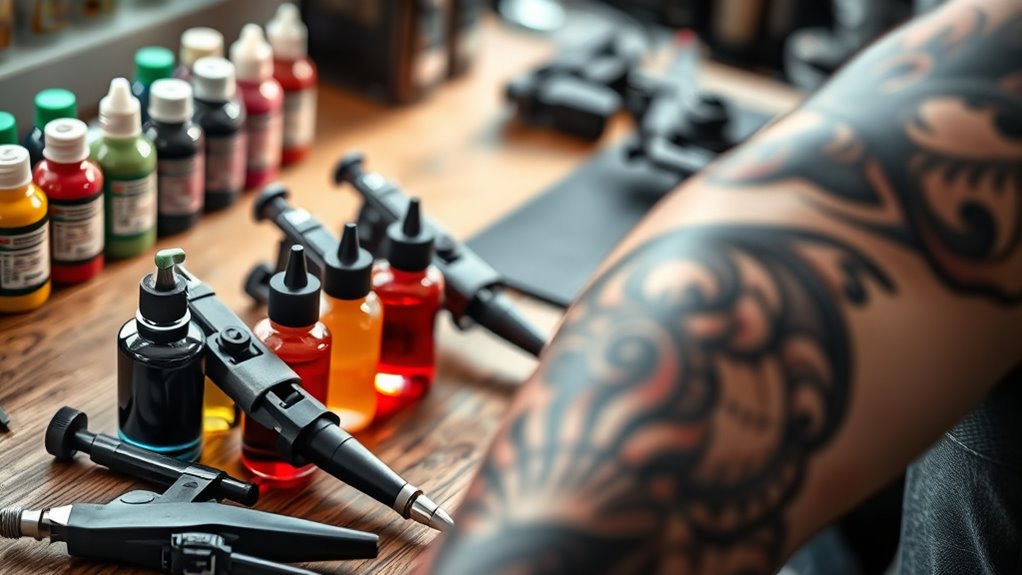
When you’re choosing tattoo ink, it’s good to know that prices vary depending on pigment quality, color, and brand reputation. Black ink usually costs less than vibrant colors because those use pricier pigments.
Plus, higher pigment concentration means richer colors but also increases costs, especially if you want detailed, large tattoos that need more ink.
Buying in bulk can help lower the price per milliliter, which is great if you’re planning multiple tattoos or professional work.
Specialty inks, like UV-reactive ones, come at a premium price due to their unique properties.
Also, factors like sterility, packaging, and safety testing add to the overall cost.
So, there’s quite a bit to consider when picking the perfect tattoo ink to balance quality and budget.
Key Takeaways
- Tattoo ink prices vary by pigment quality, with premium, organic inks costing significantly more than standard options.
- Black inks are generally cheaper and more durable, while vibrant colored inks like red and blue have higher costs due to complex pigments.
- Ink cost increases with pigment concentration, size, and detail of the tattoo, as larger and intricate designs need more ink.
- Buying ink in bulk lowers the price per milliliter but requires upfront investment and proper storage.
- Professional inks are pricier than DIY options due to safety testing, sterility, and superior pigment quality ensuring better results.
Factors That Influence Tattoo Ink Prices
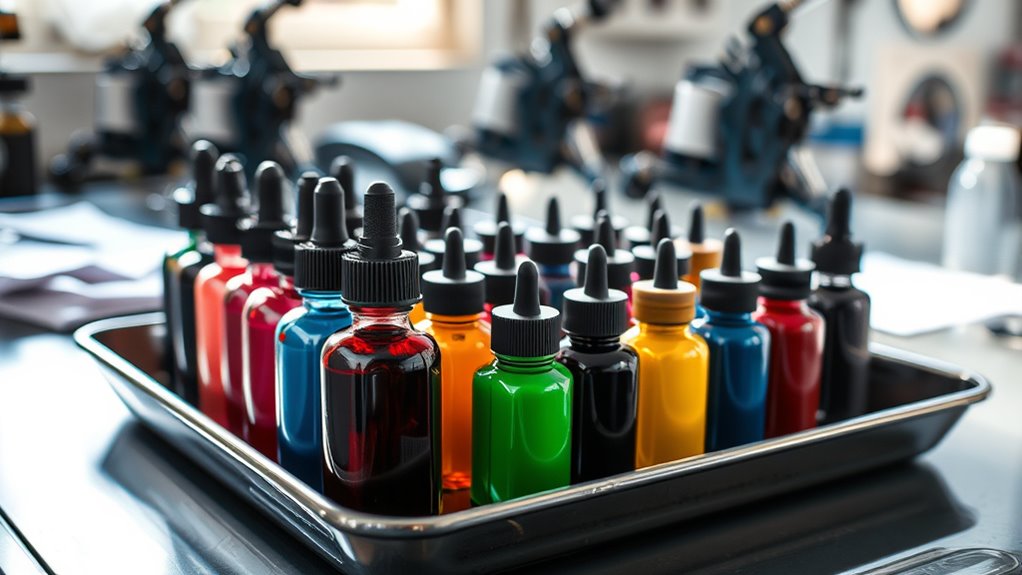
While you might assume all tattoo inks cost about the same, several key factors actually affect their prices. First, the quality of pigments plays a big role—higher-quality, organic, or rare pigments usually cost more but deliver better results.
Not all tattoo inks are priced equally—quality pigments significantly influence cost and final results.
Second, the manufacturer’s reputation and production standards influence pricing; trusted brands often charge a premium for consistency and safety. Third, the ink’s composition matters; inks with added ingredients for longevity or vibrancy tend to be pricier.
Fourth, packaging size and type can impact cost per milliliter, with larger quantities generally offering better value. Finally, regulatory compliance and testing for safety add to production expenses, which you’ll see reflected in the price.
Understanding these factors helps you choose ink that balances quality and cost effectively. It’s all about finding the right fit for your needs without overspending.
Differences Between Black and Colored Inks
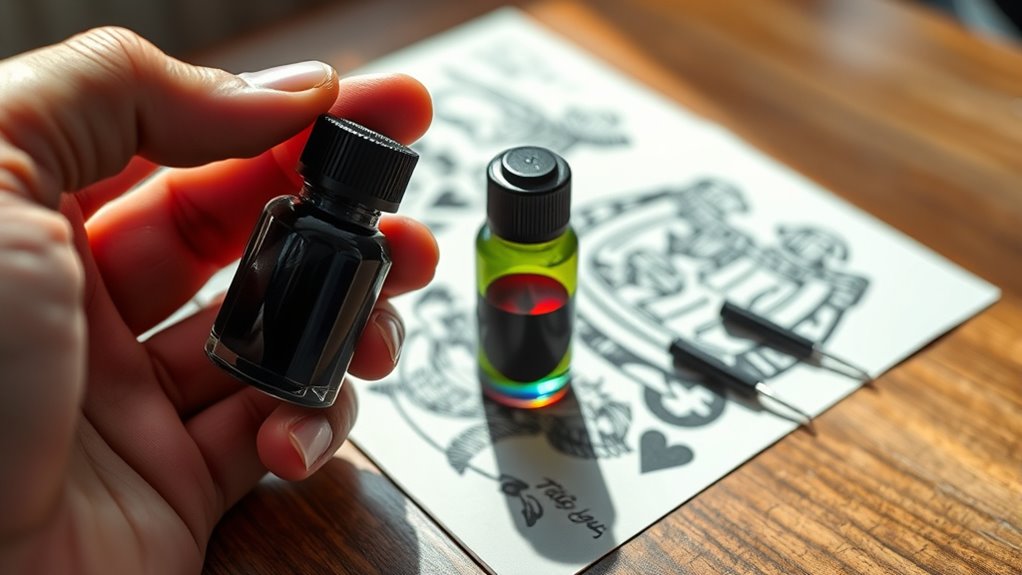
Because black and colored tattoo inks differ in composition and usage, understanding these differences can help you select the right ink for your design. Black ink typically contains carbon or soot particles, making it highly concentrated and long-lasting.
It’s commonly used for outlines and shading, providing strong contrast and durability. Colored inks, on the other hand, are made from various pigments suspended in a carrier fluid, which can vary widely.
These pigments may fade faster and require more frequent touch-ups, depending on the color and your skin type. You’ll also notice that some colors, especially vibrant reds or blues, might be pricier due to the complexity of their pigments.
Knowing these differences lets you balance your design’s visual impact with practical considerations like longevity and cost. So, it’s good to think about what matters most for your tattoo before picking the ink.
How Ink Quality Affects Cost and Safety
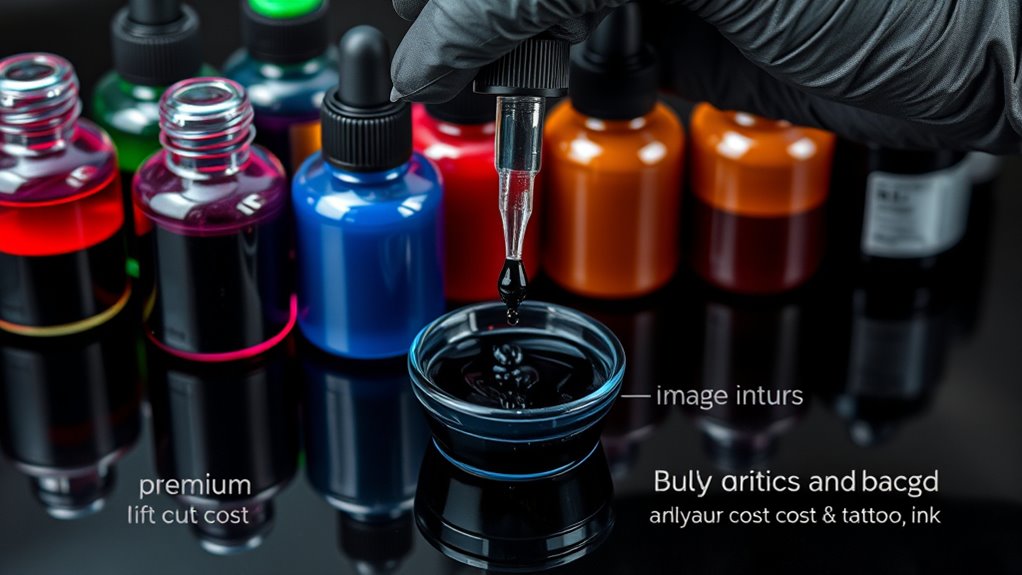
You’ll notice that premium inks often cost more because they use higher-quality, non-toxic ingredients that keep your skin safer.
Choosing standard inks might save money upfront but can increase the risk of allergic reactions or fading.
Understanding these differences helps you make smarter decisions about both cost and safety.
Premium vs. Standard Ink
When choosing tattoo ink, the quality directly impacts both the price and your safety. Premium inks generally cost more because they use higher-grade pigments and refined bases, ensuring vibrant colors and better longevity.
These inks often undergo stricter testing to minimize allergic reactions and skin irritations. On the other hand, standard inks are more affordable but might contain lower-quality pigments and fillers, which can fade faster and increase the risk of adverse reactions.
While standard inks can work well for smaller or less detailed tattoos, opting for premium ink is wise if you want richer colors and a safer experience. Ultimately, investing in premium ink helps your tattoo look better and reduces potential health risks, making it worth the extra cost.
Non-Toxic Ingredients Importance
Although cheaper inks might save you money upfront, choosing tattoo ink with non-toxic ingredients plays a crucial role in your safety and the final quality of your tattoo. Non-toxic inks reduce the risk of allergic reactions, infections, and long-term skin damage.
When you opt for high-quality ink, you’re less likely to experience fading or color changes, ensuring your tattoo looks vibrant longer. Manufacturers using safe, non-toxic components often invest more in research and testing, which increases the cost but guarantees reliability.
In contrast, low-cost inks may contain harmful metals or contaminants that put your health at risk. So, while it might be tempting to cut corners, investing in non-toxic tattoo ink protects both your skin and your artistic expression.
The Role of Pigment Concentration in Pricing
When you choose tattoo ink, the pigment concentration plays a big role in the price. Higher pigment density means more vibrant colors, but it also costs more to produce.
Understanding how concentration affects cost can help you make smarter decisions about your ink choices. It’s all about balancing quality and budget to get the look you want.
Ink Pigment Density
How much pigment an ink contains directly affects its price. When you’re choosing tattoo ink, higher pigment density means richer color saturation but also a higher cost.
Denser pigments require more raw materials and refined processing, which drives prices up. You’ll find that low-density inks are budget-friendly but may need more layers for the desired effect. This can impact your overall tattoo time and cost.
| Pigment Density | Price Range (per oz) | Typical Use |
|---|---|---|
| Low | $5 – $15 | Practice tattoos, fillers |
| Medium | $16 – $30 | Standard tattoos |
| High | $31 – $50+ | Professional, vibrant art |
Understanding pigment density helps you balance cost with quality for your tattoo project. It’s all about finding the right fit for what you want.
Color Intensity Impact
Since pigment concentration directly influences color intensity, it plays an essential role in determining tattoo ink prices. When you choose ink with higher pigment levels, you get more vibrant and long-lasting colors, which often come at a premium.
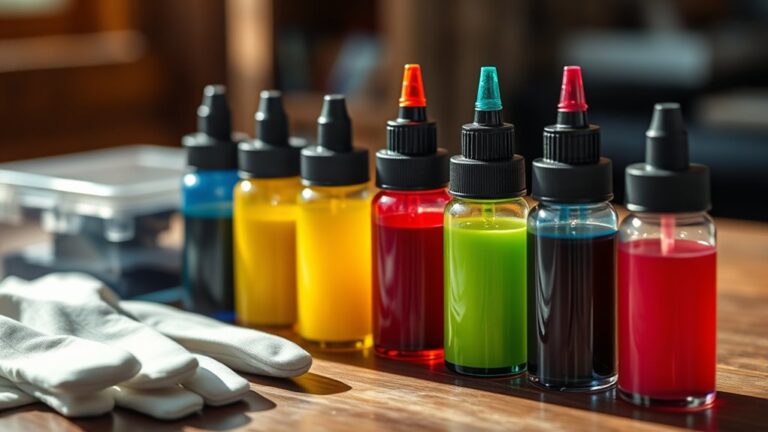
The richer the color, the more pigment is packed into the ink, increasing production costs. This means brighter reds, deeper blues, and more striking greens usually cost more than muted shades.
You’ll notice that inks designed for bold, intense colors require more pigment, making them pricier than pastel or less saturated options. So, when you’re budgeting for your tattoo, consider how much color intensity matters to you, as it directly affects the ink’s cost without even touching on concentration specifics.
Concentration and Cost
Pigment concentration doesn’t just affect color intensity—it also directly impacts the price you pay for tattoo ink. When the pigment is densely packed, the ink yields richer, more vibrant results. But producing this quality requires higher-grade materials and more complex mixing processes.
As a result, inks with higher pigment concentrations tend to cost more. If you want a tattoo that stands out with bold colors or deep blacks, investing in premium ink with concentrated pigments is essential.
Cheaper inks often dilute pigments to cut costs, which might lead to fading or dullness over time. Understanding the link between concentration and cost helps you make informed decisions.
This way, you ensure your tattoo looks great and lasts longer without unexpected expenses. Choose wisely to balance quality and budget.
Bulk Ink Purchases vs. Single Bottles: Cost Comparison
When you buy tattoo ink in bulk, you usually get a better price per milliliter than purchasing single bottles. This means you save money in the long run, especially if you tattoo frequently or use a variety of colors.
Bulk purchases often come in larger containers, reducing packaging and shipping costs, which lowers the overall price. However, buying in bulk requires more upfront investment and proper storage to maintain ink quality.
On the other hand, single bottles offer flexibility if you want to try new colors or need only small amounts. They’re also easier to store and less likely to go to waste.
Ultimately, your choice depends on how much ink you use regularly and your budget, balancing cost savings with convenience.
Brand Reputation and Its Impact on Ink Price
Although you might find cheaper tattoo inks from lesser-known brands, reputable brands often command higher prices because they guarantee quality and safety. When you invest in a trusted brand, you’re paying for consistency, non-toxic ingredients, and vibrant, long-lasting colors.
These brands have undergone thorough testing to meet health standards, reducing the risk of allergic reactions or fading. Here’s why brand reputation impacts ink price:
- Proven safety certifications and lab testing
- Consistent pigment quality and color vibrancy
- Positive reviews from professional tattoo artists
- Transparent ingredient lists and ethical sourcing
- Reliable customer support and warranty policies
Choosing a reputable brand helps you avoid potential complications and ensures your tattoos look great for years to come. It’s worth spending a bit more to get peace of mind and stunning results.
Specialty Inks and Their Premium Pricing
Since specialty inks offer unique effects and enhanced performance, they often come with a higher price tag than standard tattoo inks. You’ll encounter inks like metallics, UV-reactive, and glow-in-the-dark varieties that provide eye-catching results but demand premium costs.
Using these inks means investing not only in artistry but also in quality and safety.
| Specialty Ink Type | Emotional Impact |
|---|---|
| Metallic | Feel bold and futuristic |
| UV-reactive | Experience a secret glow |
| Glow-in-the-dark | Carry magic wherever you go |
Choosing specialty inks elevates your tattoo’s uniqueness but prepare for the extra expense. It’s a trade-off between cost and creating a standout piece that truly reflects your style.
How Tattoo Size and Detail Affect Ink Usage
When you choose a larger tattoo, you’ll use more ink simply because of the size. Intricate designs with high detail also demand extra ink to capture every line and shade.
Understanding how size and detail affect ink helps you anticipate the overall cost better. It’s good to keep this in mind when planning your tattoo so there are no surprises.
Size Impact on Ink
Because tattoo size and detail directly influence how much ink you’ll need, understanding their impact is essential for estimating costs. When your tattoo covers a larger area, it naturally requires more ink to fill the space.
This means bigger tattoos will increase your ink consumption and overall expense. Even if the design isn’t highly detailed, the sheer surface area demands more pigment.
Consider these points about size impact on ink:
- Larger tattoos use more ink, raising the cost.
- Small tattoos consume less ink, making them cheaper.
- Medium-sized tattoos fall in between, balancing cost and coverage.
- Bold outlines on bigger tattoos use more ink than fine lines.
- Solid color blocks require more ink than open designs.
Knowing this helps you plan your tattoo budget better. It’s always good to keep size in mind when you’re thinking about the final price.
Detail Levels and Consumption
Although size plays a big role in ink consumption, the level of detail in your tattoo can considerably impact how much ink your artist uses. Highly detailed tattoos require more shading, fine lines, and color blending, which means your artist will use more ink overall.
In contrast, simple or minimalist designs consume less ink despite similar sizes. Here’s a quick look at how detail level affects ink use:
| Detail Level | Ink Usage | Typical Tattoo Type |
|---|---|---|
| Low | Low | Simple symbols, small |
| Medium | Moderate | Traditional, basic color |
| High | High | Realistic, portraits |
| Very High | Very High | Hyper-realistic, complex |
| Custom | Variable | Mix of styles |
Choosing your design wisely helps control ink cost and usage. So, think about the detail before you decide—it can make a bigger difference than you might expect!
Importance of Sterility and Packaging in Ink Costs
Ensuring ink sterility and secure packaging plays an essential role in determining tattoo ink costs, as it directly impacts both safety and shelf life. When you choose sterile ink, you reduce the risk of infections. This is crucial for your clients’ well-being and your reputation.
Proper packaging also prevents contamination and preserves the ink’s quality over time. So, it’s not just about the ink itself but how it’s kept safe and fresh.
Here’s why sterility and packaging affect costs:
- Sterilization processes add production expenses
- High-quality, airtight containers prevent ink degradation
- Single-use sealed vials ensure hygiene but cost more
- Compliance with health regulations requires rigorous testing
- Longer shelf life reduces waste and replacement frequency
All these factors mean you get safer, better ink, but it does come at a price. And honestly, it’s worth it to keep things clean and professional.
DIY Tattoo Ink Costs vs. Professional Supplies
When comparing DIY tattoo ink costs to professional supplies, you’ll notice significant differences in price, quality, and safety. DIY inks may seem cheaper upfront, but they often compromise on pigment quality and sterility, which can lead to poor results or infections.
Professional tattoo inks, though pricier, undergo rigorous testing to ensure consistency, vibrant colors, and safe ingredients. If you’re serious about tattooing, investing in professional supplies saves you from potential health risks and uneven tattoos.
DIY inks might appeal if you’re experimenting or practicing, but they’re rarely suitable for permanent work. Ultimately, while DIY options cost less initially, professional inks offer reliability and peace of mind that justify their higher price in the long run.
Choose wisely to protect both your art and your skin.
Frequently Asked Questions
How Long Does Tattoo Ink Typically Last Once Opened?
Tattoo ink typically lasts about 1 to 2 years once opened, but you should use it within six months for the best quality.
Always store it tightly sealed, away from light and heat to keep it fresh. That way, your ink stays vibrant and safe to use.
Can Expired Tattoo Ink Still Be Used Safely?
You shouldn’t use expired tattoo ink; it’s risky and can cause infections or poor pigment performance. Always prioritize safety, select fresh supplies, and steer clear of suspect substances to secure stunning, safe skin art every time.
Better to be safe than sorry when it comes to tattoo ink. Fresh ink means vibrant colors and less chance of irritation or infection. So, always check the expiration date before you start your tattooing session.
What Are the Environmental Impacts of Tattoo Ink Production?
You should know tattoo ink production often involves toxic chemicals and heavy metals, which can harm ecosystems if not managed properly.
Plus, packaging waste adds up, so choosing eco-friendly inks helps reduce environmental impact.
Are There Any Allergic Reactions Specific to Certain Ink Colors?
About 10% of people experience allergic reactions to tattoo ink, especially red and yellow pigments.
You’ll likely face itching or swelling with those colors, so always do a patch test before committing to a full tattoo. Better safe than sorry, right?
How Does Tattoo Ink Affect the Healing Process?
Tattoo ink can affect healing by causing irritation or allergic reactions, which may slow recovery.
You’ll want to keep the area clean and moisturized, and watch for any unusual redness or swelling to guarantee proper healing. Just paying close attention can make a big difference.
Conclusion
Think of tattoo ink like the paint for your story’s canvas—each drop holds the power to bring your vision to life. Just as an artist chooses quality brushes and vibrant colors, you deserve inks that blend safety, value, and brilliance.
Knowing what shapes ink costs helps you invest wisely in your masterpiece. After all, your skin isn’t just a surface—it’s where your story lives, vivid and forever etched in time.
Choose your colors carefully. The cost of tattoo ink isn’t just about price—it’s about quality, safety, and how well the ink performs. Investing in premium inks means your tattoo will stay vibrant and beautiful for years to come. So, when you think about tattoo ink prices, remember you’re paying for more than just color; you’re securing a lasting piece of art on your skin.