
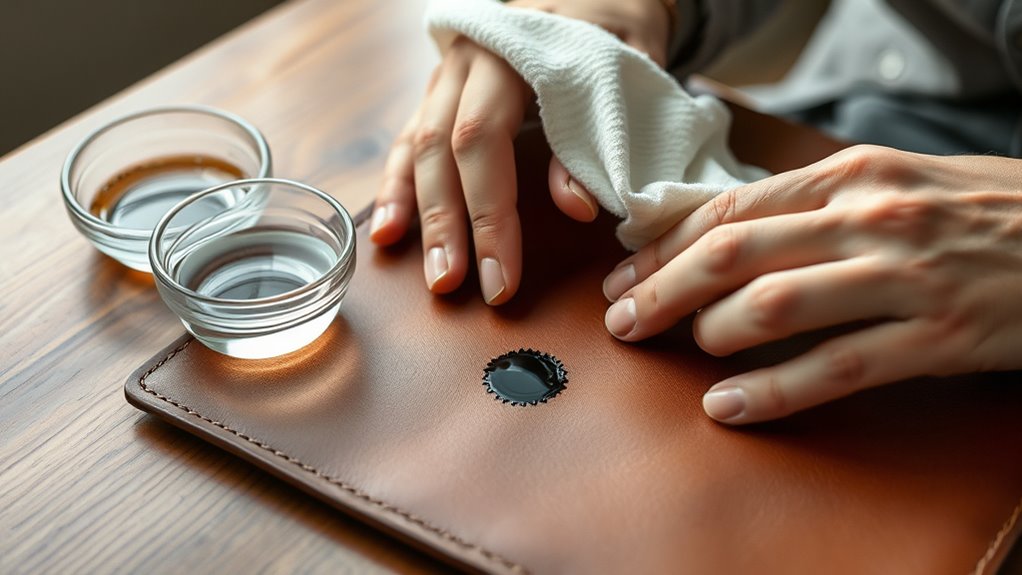
How Do You Get Ink Out of Leather Step by Step
First, identify your leather type and the kind of ink you’re dealing with. Then, gather some soft cloths, cotton swabs, a leather cleaner, and distilled water. It’s important to know what you’re working with before you start.
Next, test your cleaner on a hidden spot. This helps avoid any damage or discoloration. Once you’re sure it’s safe, gently dab the ink stain with a cloth or swab soaked in the cleaner. Work from the edges inward, but don’t rub hard—be gentle to protect the leather.
After the stain starts to lift, apply a leather conditioner. This keeps the material supple and well-protected.
Keep reading to discover detailed tips for flawless results and to make sure your leather looks great as new.
Key Takeaways
- Identify leather type and ink stain characteristics to choose an appropriate cleaning method without causing damage. This helps make sure you don’t accidentally ruin the leather.
- Gather soft cloths, cotton swabs, leather cleaner or mild soap, and distilled water for safe cleaning. Having everything ready makes the process smoother.
- Test the cleaning solution on a hidden leather area to ensure no discoloration or texture change occurs. It’s better to be safe than sorry!
- Gently dab the ink stain with a damp cotton swab or cloth using the cleaning solution, working from outside inward. Be patient and avoid rubbing harshly.
- After stain removal, apply leather conditioner evenly, let absorb, and buff to restore moisture and shine. This helps keep your leather looking great and prolongs its life.
Assess the Type of Leather and Ink Stain
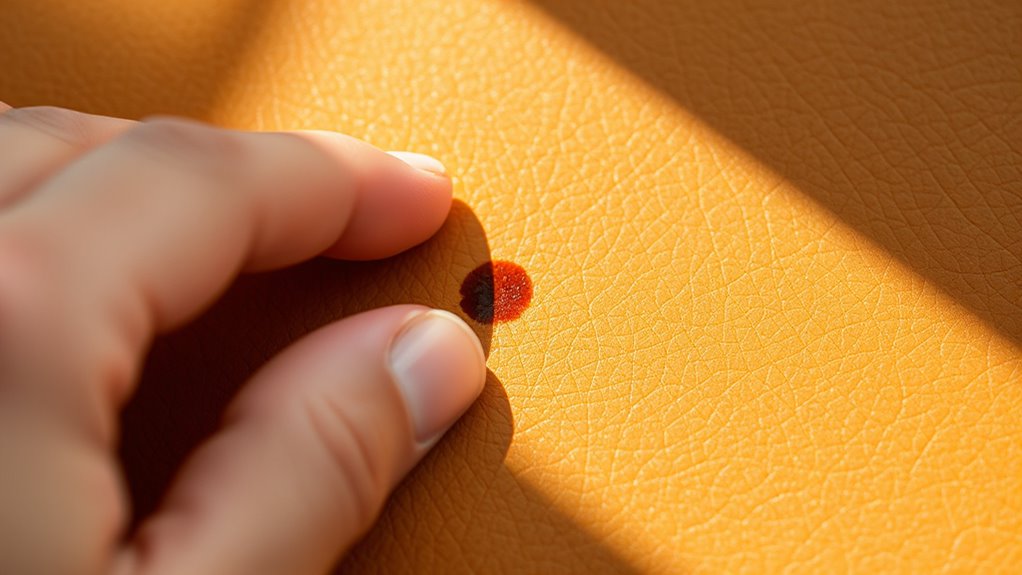
Before you begin cleaning, identify the type of leather and ink stain you’re dealing with. Different leathers—such as aniline, semi-aniline, or finished leather—react differently to cleaning methods.
Identify your leather type and ink stain before cleaning to ensure effective, safe stain removal.
Aniline leather is more delicate and porous, so it requires gentler treatment. Next, examine the ink stain itself: is it fresh or dried? Fresh ink is easier to remove, while dried ink may have set deeper into the leather fibers.
Also, determine the ink type—ballpoint pen ink behaves differently from permanent marker or printer ink. Knowing this helps you choose the safest and most effective cleaning approach.
Taking the time to assess these factors upfront prevents damage and increases your chances of successfully removing the stain without compromising your leather’s finish.
Gather Necessary Cleaning Materials
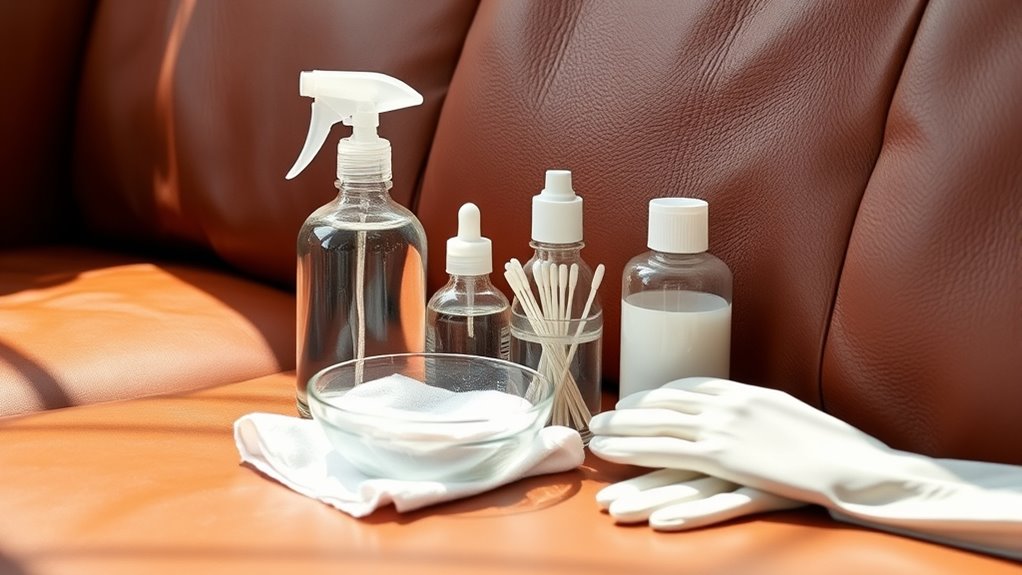
Before you start cleaning, make sure you have all the essential supplies like a soft cloth, leather cleaner, and rubbing alcohol. Choose products specifically designed for leather to avoid damage.
Having the right materials on hand will make the process smoother and safer for your leather item. It’s always better to be prepared, right? That way, you won’t have to stop midway to find something you forgot.
Essential Cleaning Supplies
While tackling ink stains on leather can feel intimidating, gathering the right cleaning supplies makes the process much smoother. You’ll want to have everything ready before you start to avoid any delays or mistakes.
Here’s what you need:
- Soft white cloths or microfiber towels – These won’t damage the leather while you gently blot the stain.
- Cotton swabs – Perfect for targeting small, stubborn ink spots without spreading the stain.
- Leather cleaner or mild soap – Use a product designed for leather to avoid harsh chemicals that might cause damage.
- Distilled water – It’s free of minerals and impurities that could harm your leather during cleaning.
Having these essentials at hand ensures you’re prepared to tackle ink stains safely and effectively. Just make sure you’ve got them all before you dive in!
Choosing Leather-Safe Products
Since leather is a delicate material, you’ll want to choose cleaning products specifically formulated for it to prevent damage. Look for gentle leather cleaners or mild soaps designed to maintain leather’s natural oils.
Avoid harsh chemicals like bleach or ammonia, which can dry out or discolor the leather. It’s always a good idea to test any product on a hidden area first to make sure it doesn’t cause adverse effects.
Also, select a soft cloth or sponge to apply the cleaner without scratching the surface. You might want to consider using a leather conditioner after cleaning to restore moisture and flexibility.
Test Cleaning Solution on a Hidden Area
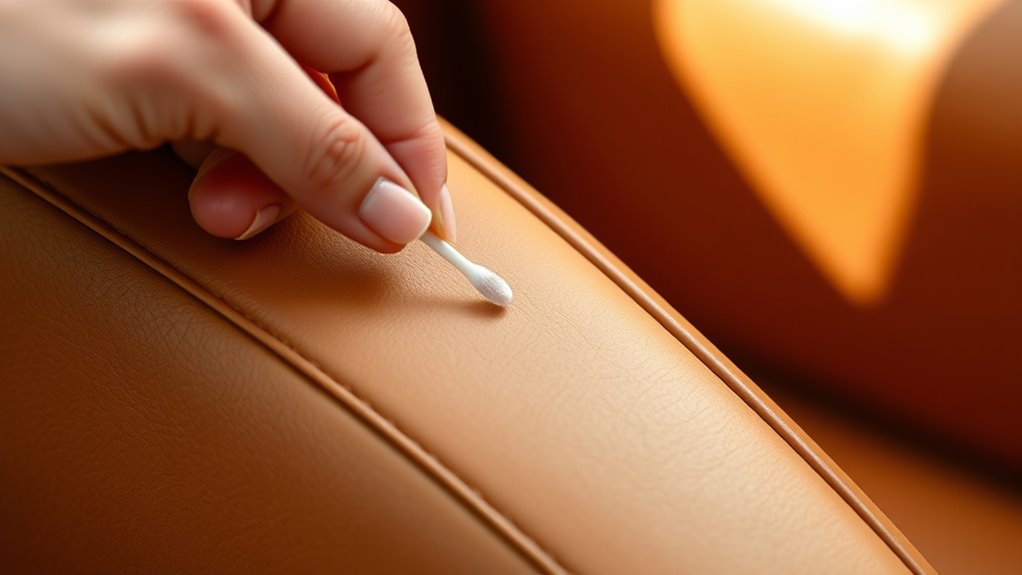
To guarantee your leather stays safe, you should always test any cleaning solution on a hidden area first. This step helps prevent unexpected damage or discoloration.
Here’s how you can do it effectively:
- Choose a discreet spot, like inside a seam or under a flap.
- Apply a small amount of the cleaning solution using a cotton swab.
- Wait 10-15 minutes to observe any changes in color or texture.
- If the leather looks normal with no damage, you’re good to proceed.
Apply Cleaning Solution to the Ink Stain
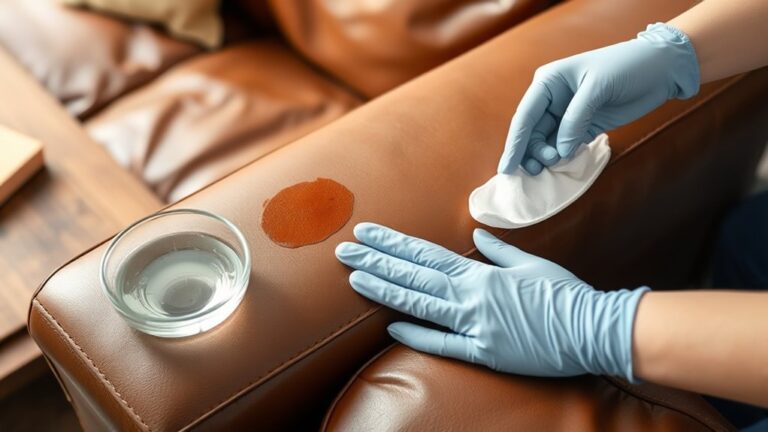
After confirming the cleaning solution won’t harm your leather, you can apply it directly to the ink stain. Use a clean cotton swab or a soft cloth dipped in the solution, making sure it’s damp but not soaking wet.
Ensure the cleaning solution is safe, then gently dab the ink stain with a damp cotton swab or cloth.
Gently dab the ink spot, focusing only on the stained area to avoid spreading the ink. Work from the outside edge of the stain toward the center to prevent it from expanding.
Avoid pouring or rubbing the solution harshly, as too much moisture or friction can damage the leather’s surface. Applying the right amount of solution is key—too much can saturate the leather, while too little might not do the trick.
Take your time to cover the entire ink mark evenly. This will get it ready for the next step in the removal process.
Gently Wipe and Blot the Stain
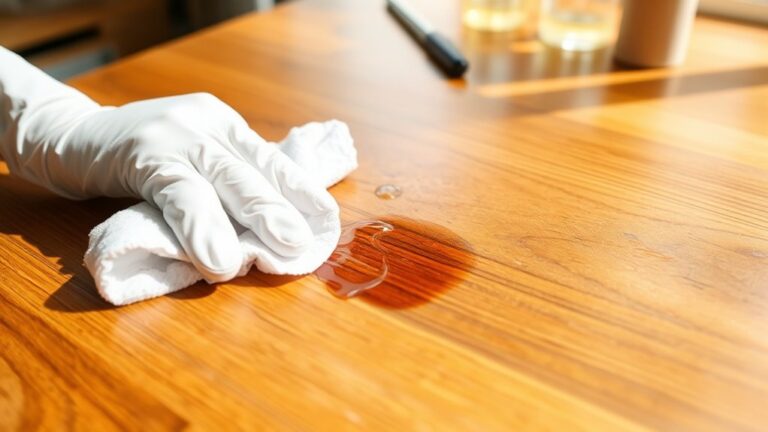
While the cleaning solution works on breaking down the ink, you’ll want to gently wipe and blot the stain to lift it from the leather. Avoid scrubbing, as this can spread the ink or damage the surface.
Here’s how to do it effectively:
- Use a clean, soft cloth or cotton pad.
- Lightly dab the stained area without rubbing.
- Blot frequently with a dry part of the cloth to absorb lifted ink.
- Repeat the dabbing and blotting process until the stain fades noticeably.
Take your time and be patient. This gentle method helps prevent further staining and protects your leather’s finish as the ink loosens.
Once the stain is mostly removed, you can prepare for the next step to fully clean the leather.
Condition the Leather After Cleaning
Once you’ve gently lifted most of the ink from the leather, it’s important to restore its moisture and suppleness. Leather can dry out after cleaning, so applying a quality leather conditioner helps maintain its softness and prevents cracking.
Use a soft cloth to apply a small amount of conditioner, rubbing it in gently with circular motions. Let the leather absorb the conditioner for about 15 to 20 minutes. Afterward, buff the surface lightly with a clean, dry cloth to remove any excess product and bring out a natural shine.
Conditioning not only rejuvenates the leather but also forms a protective barrier against future stains. Just make sure you pick a conditioner that’s suitable for your type of leather to keep it looking its best.
Frequently Asked Questions
Can Ink Stains on Leather Cause Permanent Damage?
Yes, ink stains on leather can cause permanent damage if you don’t act quickly. You’ll want to treat the stain carefully to avoid discoloration or weakening of the leather fibers.
This helps preserve its look and durability. So, the sooner you address the stain, the better off your leather will be.
Is It Safe to Use Alcohol-Based Cleaners on All Leather Types?
Would you risk ruining your leather by using harsh cleaners? You shouldn’t use alcohol-based products on all leather types—they can dry and damage delicate surfaces.
Always test on a small area or opt for gentler solutions instead. It’s better to be safe than sorry when it comes to caring for your leather!
How Long Should I Wait Before Using the Leather Item Again?
You should wait at least 24 hours before using the leather item again to make sure it’s fully dry and the cleaner has settled.
This prevents damage and helps maintain the leather’s quality and appearance. Better to be safe than sorry, right?
Can Professional Cleaning Remove Old, Set-In Ink Stains?
Think of your leather as a weathered book—professional cleaners are skilled librarians who can often revive old, set-in ink stains, restoring its story.
Yes, they can remove stubborn marks that you might not tackle alone.
Are There Any Natural Remedies for Removing Ink From Leather?
You can try natural remedies like rubbing alcohol or lemon juice on a cotton swab, but test a hidden spot first.
These might help lift fresh ink, but be gentle to avoid damaging the leather’s finish.
It’s always a good idea to go slow and see how the leather reacts before doing more.
Conclusion
Now that you’ve tackled that stubborn ink stain like a leather-cleaning superhero, your leather looks practically flawless—no ink villain stands a chance!
With just a little patience and the right moves, you’ve turned disaster into dazzling.
Remember, treating your leather with care isn’t just cleaning; it’s a tiny victory dance against messes.
So keep those cleaning materials close, and never let ink win.
You’ve got this, leather warrior! Removing ink from leather might seem tough, but with the right steps, it’s totally doable.
By following these careful methods, you protect your leather’s finish while banishing those pesky ink spots.
Stay patient, gentle, and consistent, and your leather will stay looking great for years to come.