
How Do You Remove Ink From Your Skin Quickly
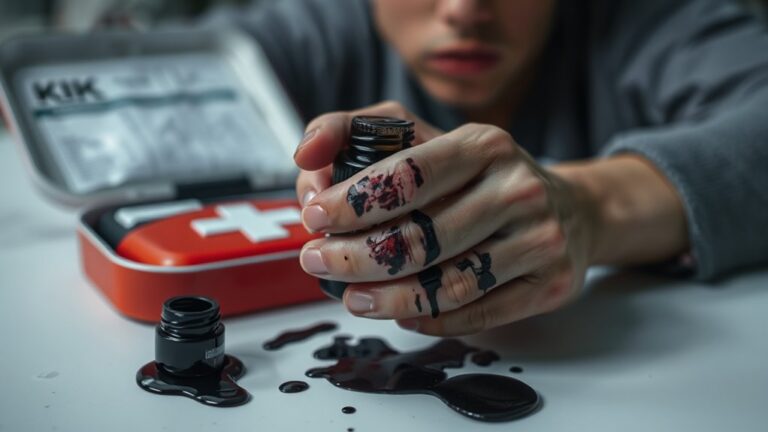
You can quickly remove ink from your skin by applying rubbing alcohol or hand sanitizer with at least 60% alcohol content. Just dab a small amount on a cotton ball and gently rub the stain in circular motions until it lifts.
If your skin is sensitive, try using baby or coconut oil to dissolve the ink while moisturizing. Washing with mild soap afterward helps clean any residue.
Keep going to discover more simple and effective methods for ink removal.
Key Takeaways
- Apply rubbing alcohol on a cotton ball and gently rub in circular motions to dissolve and lift ink from skin.
- Use hand sanitizer with at least 60% alcohol, rub on stain, let sit 30 seconds, then wipe off and rinse.
- Make a baking soda and water paste, apply to stain, scrub gently for 30 seconds, then rinse with warm water.
- Rub baby or coconut oil onto the ink stain to dissolve ink, then wipe clean and wash hands with soap.
- For sensitive skin, use gentle oils, avoid harsh chemicals, and soothe afterward with aloe vera gel.
Using Rubbing Alcohol to Remove Ink Stains
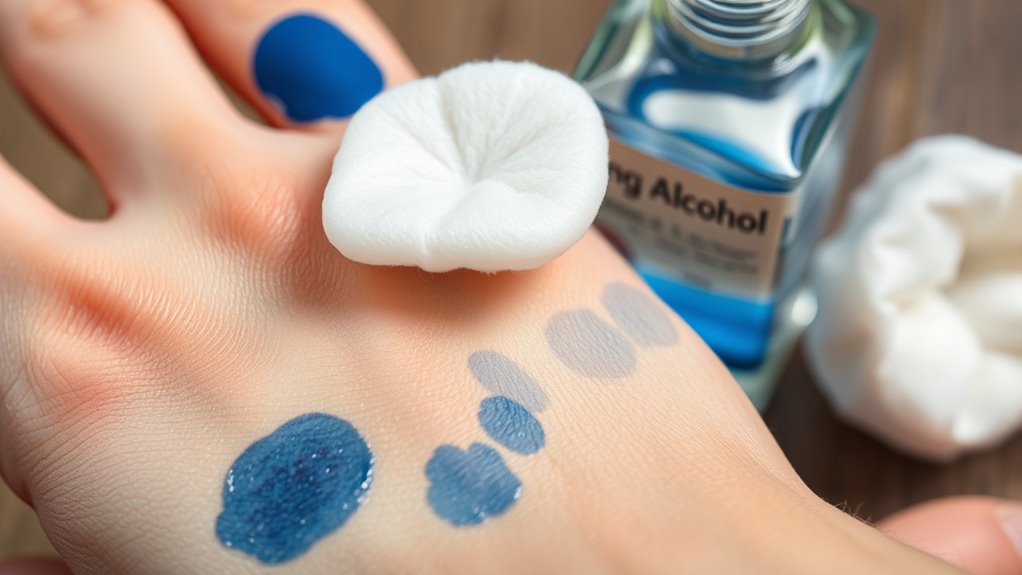
Although ink stains can be stubborn, you can quickly remove them from your skin using rubbing alcohol. Start by pouring a small amount onto a cotton ball or pad.
Ink stains can be stubborn, but rubbing alcohol quickly removes them from your skin with gentle rubbing.
Gently rub the stained area in circular motions, and you’ll notice the ink breaking down and lifting away. Just be careful not to scrub too hard, since rubbing alcohol can irritate sensitive skin.
After the ink has faded, wash the area with warm water and mild soap to remove any residue. If needed, repeat the process until the stain disappears.
Rubbing alcohol is effective because it dissolves the ink’s oils and pigments, making it easier to wipe off. Keep some rubbing alcohol handy for quick ink mishaps—you’ll thank yourself later.
Applying Hand Sanitizer for Quick Ink Removal
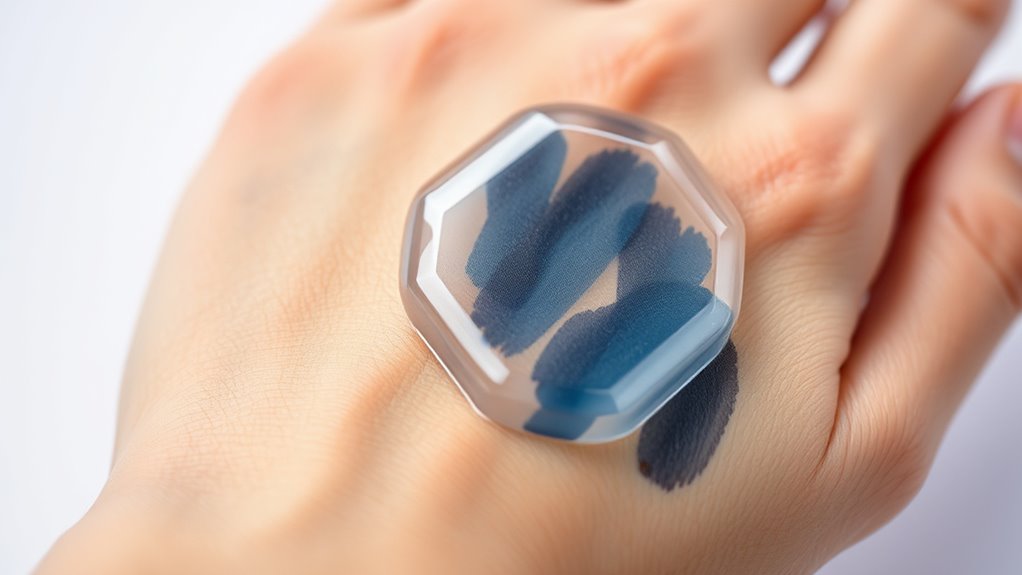
When choosing a hand sanitizer, pick one with at least 60% alcohol to break down ink effectively. Apply a small amount directly to the stain and gently rub it in for quick removal.
Afterward, rinse and moisturize your skin to prevent dryness and irritation. This way, your hands stay clean and soft without any hassle.
Choosing Effective Sanitizers
Since hand sanitizers contain alcohol and other cleansing agents, they work well at breaking down ink on your skin quickly. When choosing a sanitizer, look for one with at least 60% alcohol content.
Higher alcohol percentages improve ink removal by dissolving the pigments more effectively. Avoid sanitizers with thick gels or added moisturizers, as these can make the ink harder to lift.
Clear liquid sanitizers often perform better than those with fragrances or coloring, which might stain your skin further. You’ll also want to pick a product that’s safe for your skin type to prevent irritation, especially if you have sensitive skin.
Application Techniques
To remove ink quickly using hand sanitizer, you’ll want to apply it directly and evenly over the stained area. This guarantees the sanitizer penetrates the ink, loosening it from your skin effectively.
Follow these steps for best results:
- Squeeze a small amount of hand sanitizer onto the ink stain, covering it completely without soaking your skin.
- Rub gently in circular motions to help break down the ink pigments and lift them away.
- Let it sit for about 30 seconds, allowing the alcohol to dissolve the ink before wiping it off with a clean cloth or tissue.
Using this method, you’ll see the ink fading quickly without harsh scrubbing or irritation. It’s pretty simple and gentle on your skin, so no worries about redness or dryness!
Post-Removal Skin Care
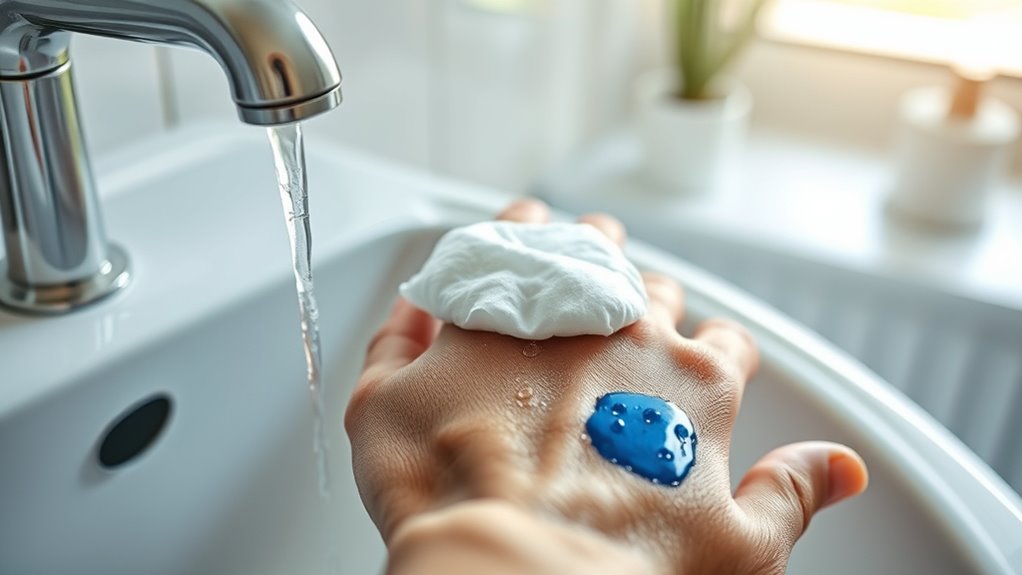
How can you soothe your skin after using hand sanitizer to remove ink? Since hand sanitizer contains alcohol, it can dry out your skin. Right after removal, rinse the area with lukewarm water to wash off any residue.
Then, gently pat your skin dry with a clean towel. Apply a fragrance-free moisturizer or aloe vera gel to rehydrate and calm irritation. Avoid harsh soaps or scrubbing, as they can worsen dryness or cause redness.
If your skin feels particularly sensitive, consider using a hydrocortisone cream for a short time, but only if necessary. Remember, keeping your skin moisturized helps it recover faster and prevents peeling.
Taking these simple steps ensures your skin stays healthy after quick ink removal.
How to Use Baking Soda and Water Paste
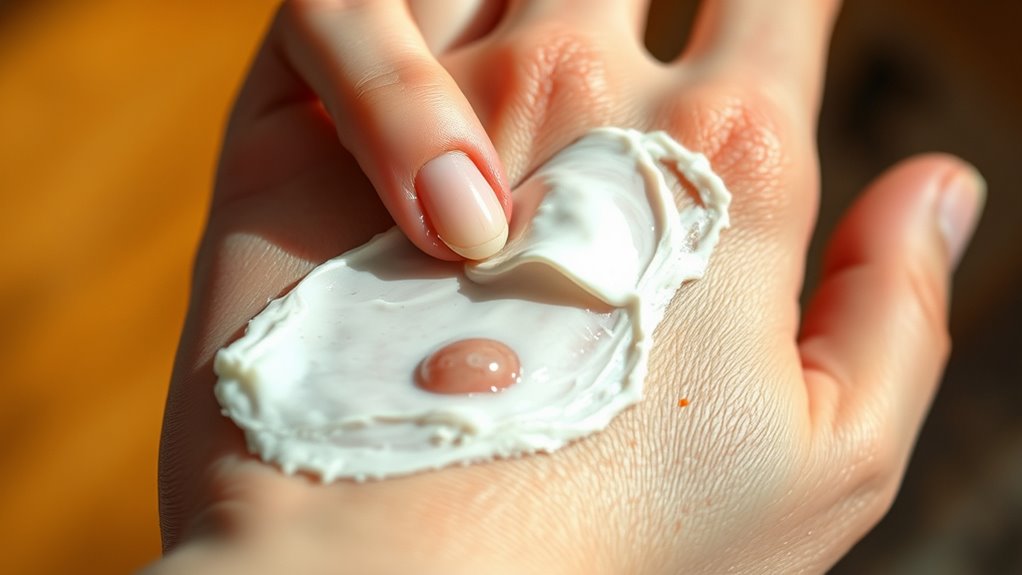
Start by mixing baking soda with a small amount of water to form a thick paste. Then, apply the paste directly onto the ink-stained area of your skin.
Gently scrub the paste in circular motions to lift the ink effectively. It’s pretty simple, and you’ll see the ink start to fade right away!
Mixing Baking Soda Paste
Although you might be tempted to apply baking soda directly, mixing it with water creates an effective paste that lifts ink from your skin without irritation.
To prepare the paste, follow these simple steps:
- Measure two tablespoons of baking soda into a small bowl.
- Gradually add one tablespoon of water to the baking soda.
- Stir the mixture until it forms a smooth, spreadable paste.
This paste balances exfoliation and gentleness, making it safe to use on sensitive skin.
Just be careful not to add too much water, or the paste will become runny and less effective.
Once mixed, your baking soda paste is ready to tackle stubborn ink stains quickly and safely.
Applying and Scrubbing Method
Once you’ve prepared the baking soda paste, apply a small amount directly onto the ink-stained area. Gently rub it in circular motions to lift the ink from your skin.
Keep rubbing for about 30 seconds, then rinse with warm water. You can repeat if necessary, but be careful not to scrub too hard to avoid irritation.
Pat dry with a clean towel. This method works because baking soda is mildly abrasive, helping to break down ink particles.
| Step | Action | Tip |
|---|---|---|
| 1 | Apply paste | Use a pea-sized amount |
| 2 | Rub in circular motions | Be gentle to avoid irritation |
| 3 | Rinse and dry | Use warm water and pat dry |
Removing Ink With Baby Oil or Coconut Oil
If you want a gentle yet effective way to remove ink from your skin, baby oil or coconut oil can be your best allies. These oils break down the ink’s oils, making it easier to wipe away without harsh scrubbing.
Here’s how to use them:
- Pour a small amount of oil onto a cotton ball or soft cloth.
- Gently rub the ink-stained area in circular motions, letting the oil dissolve the ink.
- Wipe the area clean with a damp cloth and wash your hands with soap afterward.
This method is especially great for sensitive skin because it moisturizes while removing ink. So, it leaves your skin soft and clean.
The Effectiveness of Toothpaste on Ink Marks
While toothpaste is commonly known for cleaning teeth, it can also help remove ink marks from your skin. The mild abrasives and detergents in toothpaste break down ink particles, making it easier to wipe them away.
To use it, apply a small amount to the stained area, rub gently in circular motions, then rinse with warm water. Just be sure to avoid harsh scrubbing to prevent irritation.
| Aspect | Details |
|---|---|
| Ingredients | Mild abrasives, detergents |
| Application | Gently rub on ink mark |
| Effectiveness | Works well on fresh ink stains |
| Caution | Avoid sensitive or broken skin |
Toothpaste is a quick, accessible option but it might not work on all ink types equally. So, keep that in mind when you try it out!
Tips for Cleaning Ink From Sensitive Skin
Because sensitive skin can easily become irritated, you’ll want to choose gentle methods when removing ink. Harsh chemicals or vigorous scrubbing can worsen irritation or cause redness.
Instead, try these gentle tips to clean ink safely:
- Use coconut oil or olive oil: Apply a small amount to the ink stain, gently rubbing with your fingertips. Oils help break down ink without drying out your skin.
- Try a mild soap and lukewarm water: Wash the area softly, avoiding hot water which can inflame sensitive skin.
- Apply aloe vera gel: After cleaning, soothe your skin with aloe vera to reduce any irritation and keep your skin hydrated.
These methods protect your skin’s barrier while effectively removing ink. Give them a try and your skin will thank you!
Frequently Asked Questions
Can Ink Removal Products Cause Allergic Reactions?
Yes, ink removal products can cause allergic reactions, especially if you have sensitive skin. You should always test a small area first and stop using the product if you notice redness, itching, or swelling.
It’s better to be safe than sorry! If anything feels off, just pause and maybe try a different option. Your skin will thank you for the extra care.
How Long Does Ink Typically Stay on the Skin?
Ink usually stays on your skin for a few days, depending on the ink type and your skin’s texture.
You’ll notice it fading naturally as your skin sheds dead cells, but scrubbing can speed this up.
Are There Natural Alternatives to Chemical Ink Removers?
You can use natural alternatives like coconut oil, olive oil, or lemon juice to remove ink from your skin. They break down the ink gently without harsh chemicals, making them safe and effective for quick removal.
These options are pretty easy to find around the house, too. Plus, they’re gentle on your skin, so no worries about irritation. Give them a try next time you need to clean up some ink!
Is It Safe to Remove Ink From Children’s Skin?
You should be cautious—children’s skin is as delicate as a butterfly’s wing. Use gentle, non-toxic removers like baby oil or mild soap.
Avoid harsh chemicals to keep their skin safe while removing ink quickly and effectively. It’s all about being gentle and careful!
What Should I Do if Ink Gets Into My Eyes?
If ink gets into your eyes, rinse them immediately with clean, lukewarm water for at least 15 minutes. Avoid rubbing your eyes because that can make things worse.
If irritation or vision problems stick around, don’t wait—get medical help right away. It’s better to be safe and have a professional check it out.
Conclusion
You might think removing ink from your skin takes forever, but surprisingly, you’ve got several quick fixes right at home. Whether it’s rubbing alcohol, hand sanitizer, or even toothpaste, chances are one of these will work faster than you expect.
And if you happen to have baby oil or baking soda nearby, you’re already halfway there. These common household items can do wonders when it comes to getting ink off your skin quickly and easily.
So next time you spot ink on your skin, don’t stress—you’ve got easy, effective options waiting. Using rubbing alcohol or hand sanitizer can break down the ink fast. Toothpaste and baking soda act like gentle scrubs, helping lift the stain without harsh chemicals. Baby oil, meanwhile, moisturizes while loosening ink. With these simple tricks, removing ink from your skin quickly is totally doable without any fancy products. Just grab what’s around and say goodbye to those pesky ink marks in no time!