

Do Fire Alarms Spray Ink?
No, fire alarms don’t spray ink or mark intruders in any way. Their main job is to detect smoke or heat by sensing changes in the environment.
When they do, they alert you with loud sounds and flashing lights to warn you of potential fire danger.
You might have heard the myth that fire alarms spray ink, but that’s actually confusing them with security ink tags used in stores.
Fire alarms are purely safety devices designed to keep you safe by giving a quick warning. They don’t have any marking function.
If you’re curious about how fire alarms work or what else helps keep you safe in your home or workplace, keep exploring these details.
Understanding how these devices function can give you peace of mind and help you stay prepared.
Key Takeaways
- Fire alarms do not spray ink; their function is to detect smoke, heat, or flames and alert occupants.
- The ink spray myth likely confuses fire alarms with security ink tags used in theft prevention.
- Fire alarm systems focus solely on signaling danger through sounds and flashing lights, not marking intruders.
- No common or advanced fire alarm technology includes ink spraying as a detection or deterrent method.
- Trust in fire alarms should be based on their proven alerting functions, not on misinformation about ink spraying.
How Fire Alarms Detect Smoke and Fire
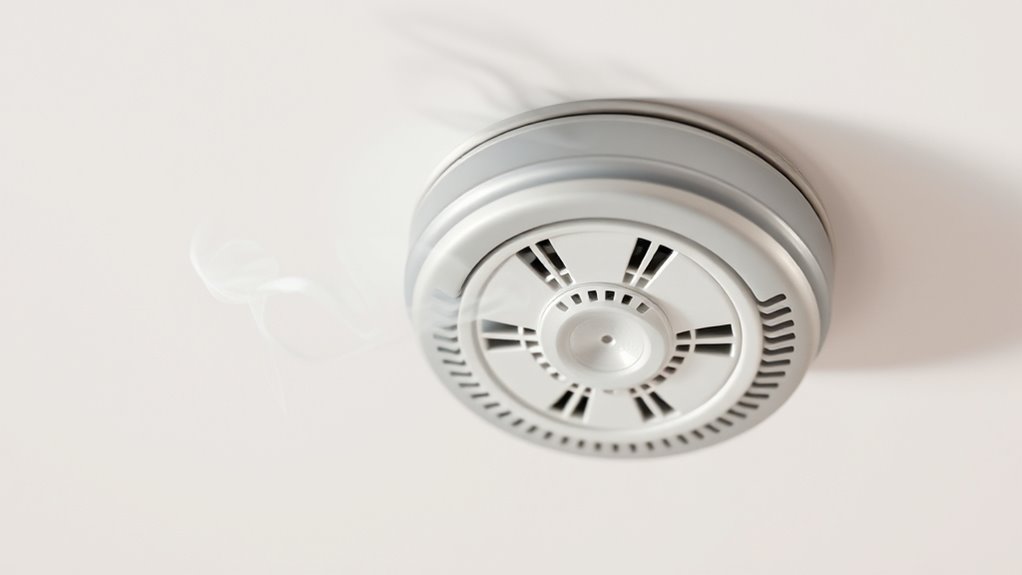
Although you might not notice them, fire alarms constantly monitor the air for signs of smoke or heat. When smoke particles enter the alarm’s sensing chamber, they disrupt the normal flow of light or ions, depending on the detector type.
This disruption triggers the alarm. Similarly, heat detectors activate when temperatures rise rapidly or exceed a set threshold.
You rely on these early warnings to act quickly, so the system must be sensitive yet avoid false alarms. By continuously scanning the environment, fire alarms give you precious seconds to respond before a fire spreads.
Their detection methods focus on changes in the air, ensuring they catch danger early without needing to see flames directly. This smart monitoring keeps you safe without interrupting your daily life.
Common Types of Fire Alarm Systems
When you choose a fire alarm system, you’ll find several common types designed to fit different needs and environments. Understanding these can help you pick the right one for your space.
Here are three popular types:
- Conventional Systems: These divide your building into zones, triggering alarms when smoke or heat is detected in any zone. They’re straightforward and cost-effective for smaller areas.
- Addressable Systems: Each detector has a unique address, letting you pinpoint exactly where the fire or smoke is detected. This system suits larger or more complex buildings.
- Wireless Systems: These use radio signals, making installation easier without extensive wiring. They’re flexible and great for historic buildings or places where wiring is difficult.
None of these systems spray ink; they focus solely on alerting you quickly to danger.
Debunking the Ink Spray Myth
While some rumors claim fire alarms spray ink to mark intruders or vandals, you won’t find any credible fire alarm system that does this. Fire alarms are designed strictly for detecting smoke, heat, or flames—not for marking people.
Fire alarms detect smoke and heat—they do not spray ink or mark intruders in any way.
The myth likely stems from confusion with security systems using ink tags on merchandise or graffiti deterrents, but these are entirely separate technologies. If you worry about fire alarms spraying ink, you can rest assured they won’t.
Instead, fire alarms focus on alerting you through loud sounds and flashing lights to keep you safe. Don’t let misinformation make you doubt the reliability of your fire safety devices—they’re there to protect, not punish or mark anyone.
Knowing the facts helps you trust your fire alarm system fully.
Alternative Fire Safety Technologies
Since traditional fire alarms focus mainly on detection and alerting, you might wonder what other technologies can enhance your fire safety.
Beyond just sounding an alarm, modern systems offer proactive solutions to protect you and your property. You can explore:
- Smart Smoke Detectors: These connect to your phone, sending alerts wherever you are. They can even distinguish between smoke types for better accuracy.
- Fire Suppression Systems: Automated sprinklers or gas-based systems act immediately to control or extinguish fires before they spread.
- Thermal Imaging Cameras: These detect unusual heat patterns early, helping you spot fires before smoke even appears.
The Purpose of Fire Alarm Signals
Although fire alarms primarily alert you to danger, their signals serve several essential purposes beyond just making noise. They grab your attention immediately, ensuring you recognize the urgency.
Signals can also indicate the type of emergency, helping you respond appropriately. Additionally, they provide continuous warning until the danger is resolved or acknowledged.
| Purpose | Description | Your Benefit |
|---|---|---|
| Alert | Immediate sound or light signal | Quick awareness of danger |
| Differentiate | Varying tones or patterns | Identify fire or other hazards |
| Persist | Continuous or repeated signals | Guarantees you don’t ignore it |
| Guide | Signal location or evacuation aid | Helps you find safe exit routes |
These functions work together to keep you safe and informed.
What to Do When a Fire Alarm Sounds
When a fire alarm sounds, you need to act quickly to guarantee your safety. Follow evacuation procedures calmly and make sure to alert authorities as soon as possible.
Knowing these steps can help you respond effectively in an emergency. So, stay calm and think clearly — it really makes a difference.
Immediate Safety Actions
If a fire alarm sounds, you need to act quickly and calmly to guarantee your safety. Don’t panic or freeze—your immediate actions can make all the difference.
First, stop what you’re doing and listen carefully for any instructions or announcements. Then, prepare yourself to leave the area promptly.
Here’s what you should do right away:
- Check doors for heat by lightly touching them; avoid opening if hot or smoky.
- Alert others nearby by shouting or knocking on doors.
- Gather any essential items close at hand, like keys or a phone, but don’t waste time searching.
Evacuation Procedures
Once the fire alarm sounds, you’ll need to evacuate immediately to stay safe. Don’t hesitate or gather belongings—leave everything behind.
Follow the designated exit routes calmly but quickly, avoiding elevators. If smoke blocks your path, stay low to the ground where the air is clearer.
Use the back of your hand to check doors for heat; if a door feels hot, find another way out. Assist anyone who needs help, but don’t put yourself at risk.
Once outside, move away from the building and gather at the predetermined meeting spot so responders can account for everyone. Stay clear of emergency vehicles and don’t re-enter until officials declare it safe.
Your prompt, orderly evacuation can save lives.
Alerting Authorities
After evacuating, your next priority is to confirm that authorities are notified so they can respond quickly. Many modern fire alarms automatically alert emergency services, but you shouldn’t rely solely on technology.
Once you’re in a safe location, take these steps:
- Call 911 or the local emergency number to report the fire. Make sure to provide clear details about the location and nature of the incident.
- Inform building management or security personnel, if available. They can assist responders and help coordinate efforts.
Frequently Asked Questions
Can Fire Alarms Be Connected to a Smartphone App?
Yes, you can connect fire alarms to smartphone apps. They send alerts directly to your phone, letting you monitor your home’s safety remotely.
It’s a smart way to stay informed and act quickly in emergencies. This way, you’re always in the loop, even when you’re not at home.
How Often Should Fire Alarms Be Tested?
You should test your fire alarms once a month to stay safe.
Did you know 60% of home fire deaths happen where alarms aren’t working?
Regular checks keep you protected and alert in emergencies.
Do Fire Alarms Require Professional Installation?
Yes, you should get fire alarms professionally installed to guarantee they’re correctly placed and wired.
However, some models are easy to install yourself if you follow the instructions carefully and understand basic electrical work.
It really depends on your comfort level with handling electrical tasks.
If you’re unsure, it’s always safer to call a pro!
What Is the Lifespan of a Typical Fire Alarm?
Like a loyal guardian, your fire alarm typically lasts around 8 to 10 years.
You should replace it after this time to make certain it keeps protecting you reliably, as its sensors wear down silently over time.
It’s easy to forget, but keeping your alarm up to date is key for your safety. So, mark your calendar and stay safe!
Are There Fire Alarms Designed for Outdoor Use?
Yes, you can find fire alarms designed specifically for outdoor use. They’re built to withstand weather conditions like rain and extreme temperatures.
This ensures reliable detection and safety even outside your home or commercial property. So, whether it’s your backyard or a work site, these alarms have got you covered.
Conclusion
Think of fire alarms like your phone’s emergency alert—they don’t spray ink to mark danger; they simply warn you with sound and light. Just like a lighthouse doesn’t throw water on ships but guides them safely, fire alarms detect smoke and fire to keep you safe.
Remember, when that alarm sounds, it’s your signal to act quickly, not a messy spray. Stay alert, stay safe, and trust the technology designed to protect you. Fire alarms don’t spray ink—they provide a clear, loud warning so you can respond fast and avoid danger. So next time you hear that beep, know it’s all about your safety, not a colorful mess.